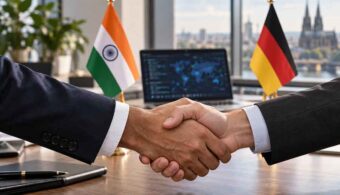
Days before the European Union’s top leadership arrives in India as chief guests for the Republic Day celebrations and the 16th India–EU Summit on January 27, the bloc has signalled a decisive shift in its approach towards New Delhi.
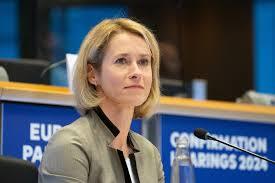
Addressing the European Parliament in Strasbourg, EU High Representative for Foreign Affairs and Security Policy and Vice-President of the European Commission, Kaja Kallas, described the upcoming summit as a “pivotal moment” and said India is becoming “indispensable” to Europe’s economic resilience.
Her remarks set the tone for what officials on both sides are portraying as a strategic reset in ties, with new initiatives spanning trade, defence, technology, mobility and people-to-people exchanges.
“The EU and India are moving closer together at a time when the rules-based international order is under unprecedented pressure through wars, coercion, and economic fragmentation,” Kallas said.
New strategic agenda for 2030
At the heart of the summit will be the adoption of a new EU–India Comprehensive Strategic Agenda for 2030, designed to chart the partnership’s direction over the rest of the decade.
Kallas said leaders would move beyond declarations and endorse “concrete deliverables” to ensure the relationship progresses “from words to action”.
“The two sides worked on the joint statement and agenda mindful of the fact that the Summit must deliver, taking into account the geopolitical landscape,” she told Members of the European Parliament (MEPs).
She added that negotiations on the joint statement and the new strategic agenda were progressing well, despite challenges in preparations for the visit.
Security and defence partnership to be signed
One of the most significant announcements ahead of the summit is the agreement to sign a new EU–India Security and Defence Partnership, covering maritime security, cybersecurity and counterterrorism cooperation.
“In a more dangerous world, we will both gain from working closely together,” Kallas said, explaining that closer security coordination had become essential amid global instability.
The partnership is expected to be formally signed next week during the visit of European Commission President Ursula von der Leyen and European Council President Antonio Costa, who will co-chair the summit with Prime Minister Narendra Modi.
Kallas, who will accompany the leaders to India, said preparations were going well, “but not without challenges”.
The EU and India also aim to conclude negotiations on a Security of Information Agreement, intended to facilitate deeper cooperation in sensitive strategic and intelligence-related domains. “In a dangerous world, India and the EU could benefit from working together,” she added.
Free Trade Agreement back on centre stage
Trade will be another core pillar of the summit agenda, with renewed momentum around the long-pending India–EU Free Trade Agreement (FTA).
Kallas said the proposed deal would help open markets, remove regulatory barriers and strengthen critical supply chains, particularly in sectors such as clean technologies, pharmaceuticals and semiconductors.
She reiterated that the EU remains among India’s largest trading partners and underlined New Delhi’s growing importance to European economic strategy.
India, she said, is “indispensable” for Europe’s economic resilience. The visit itself is centred on progress towards finalising the FTA, although officials acknowledge negotiations are still ongoing.
Mobility framework for students and professionals
Another deliverable expected at the summit is a Memorandum of Understanding on a comprehensive mobility framework, aimed at easing the movement of people between the two sides.
According to Kallas, the framework would facilitate travel for students, seasonal workers, researchers and highly skilled professionals, while also promoting joint research and innovation.
Shared democratic responsibility amid geopolitical turbulence
Placing the partnership in a broader global context, Kallas warned that the international order is under strain from multiple fronts — from wars and economic fragmentation to geopolitical shocks.
She pointed to the Russia–Ukraine war entering its fourth year and growing uncertainty in transatlantic relations following policy shifts by US President Donald Trump, including threats of tariffs on European countries and demands related to Greenland.
Against this backdrop, she urged India and the EU to act with greater urgency.
“Two major democracies cannot afford to hesitate,” she said, stressing their shared responsibility to uphold international law, the UN Charter and a multilateral system suited to the 21st century.
Cooperation in the Indo-Pacific
Kallas also highlighted the Indo-Pacific as a key theatre for future cooperation.
“In the Indo-Pacific and beyond, Europe and India can help anchor stability by defending open sea lanes, strengthening maritime domain awareness and resisting coercion in all of its forms,” she told parliamentarians.
She said the goal of deeper cooperation was strategic in nature: “The goal is simple but strategic — to embed trusted standards that shape global markets rather than react to them.”
Trilateral cooperation mechanism launched in New Delhi
Parallel to summit preparations, India and the EU have also taken steps to expand cooperation with third countries.
The first meeting of the Joint Steering Committee (JSC) for India–EU Trilateral Cooperation was held in New Delhi this week, co-chaired by EU Ambassador to India Hervé Delphin and Ministry of External Affairs Joint Secretary Priyanka Chauhan.
MEA spokesperson Randhir Jaiswal described the meeting as an important milestone in strengthening the strategic partnership.
“The first meeting of the Joint Steering Committee (JSC) for India-European Union Trilateral Cooperation was held in New Delhi, marking an important step in strengthening the strategic partnership between India and the EU,” he said.
In a post on X, Jaiswal added: “Strengthening Strategic Partnership! The first meeting of the Joint Steering Committee (JSC) for India-EU Trilateral Cooperation was held today in New Delhi, co-chaired by @EUAmbIndia Herve Delphin and MEA Joint Secretary Priyanka Chauhan. Reaffirming our commitment towards trilateral cooperation, the JSC agreed on the modalities to jointly create and work together on solutions addressing development challenges around the world.”
He further noted that the committee agreed to engage with partner countries based on shared values and priorities. “The JSC agreed to work with partner countries based on shared values, mutual interests, and common developmental priorities, in a collaborative trilateral framework to implement development cooperation projects in priority sectors and regions,” he said.
Industry and policy push for early FTA conclusion
Meanwhile, momentum around the FTA has also been building in India.
At a high-level dialogue titled “India–EU Summit: FTA and the Road Ahead”, jointly organised by the Chintan Research Foundation (CRF) and the Centre for Global India Insights (CGII) in New Delhi, industry leaders, policymakers and diplomats called for an early conclusion of the trade agreement.
Participants argued that the deal is critical for boosting exports, strengthening supply-chain resilience and attracting long-term investment, particularly at a time of heightened global uncertainty.
The discussions took place against the backdrop of renewed political engagement between New Delhi and Brussels following deliberations at the World Economic Forum in Davos.