
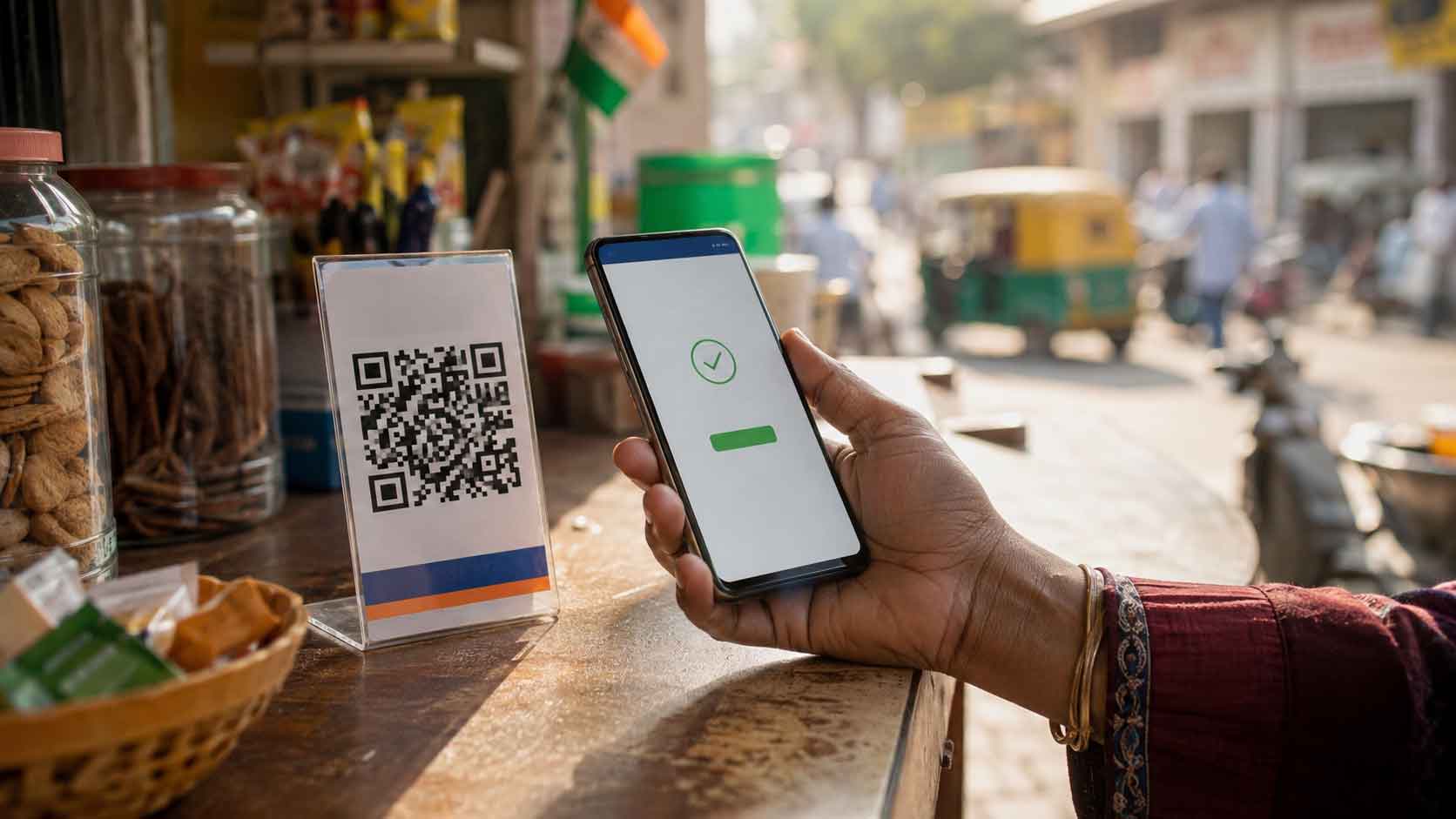
A decade ago, paying a neighbourhood shopkeeper by scanning a QR code was far from commonplace in India. Today, the same method is used for transactions ranging from a cup of tea and an autorickshaw ride to utility bills, online purchases and transfers between bank accounts.
At the centre of this transformation is the Unified Payments Interface (UPI), launched on August 25, 2016. In ten years, the home-grown payment system has evolved from a new banking interface into an essential layer of India’s economic infrastructure.
Developed by the National Payments Corporation of India (NPCI), UPI enables real-time transfers between bank accounts through mobile applications. Its interoperable architecture allows users of different banks and payment apps to transact with one another, making the system accessible without tying customers to a single service provider.
In its first month, UPI processed around 90,000 transactions. By July 2026, it was handling a record 2,366 crore transactions in a single month, with a combined value of ₹29.88 lakh crore.
Ten years of rapid expansion
UPI began with 21 participating banks in 2016. By July 2026, the number of banks live on the platform had increased to 741, encompassing public and private-sector banks, small finance banks, payments banks and cooperative banks.
The platform’s annual transaction volume rose from 1.78 crore in the 2016-17 financial year to 24,162 crore in 2025-26. This represented a compound annual growth rate of 188%.
Over the same period, the annual value of UPI transactions increased from ₹0.07 lakh crore to approximately ₹314 lakh crore, recording compound annual growth of 155%.
The momentum has continued in 2026. Monthly transaction volumes crossed 2,300 crore for the first time in May, reaching 2,320 crore, before setting a new record in July. UPI processed an average of around 66 crore transactions every day during the year.
UPI accounted for approximately 84% of India’s digital-payment transaction volume in 2025-26. The Reserve Bank of India separately reported that the platform represented 85.5% of payment-system transaction volumes during the second half of 2025.
Its share by transaction value was substantially lower because systems such as Real Time Gross Settlement continue to process large institutional and corporate payments. UPI’s dominance lies in the enormous volume of retail transactions taking place across India every day.
The small-payment transformation
The significance of UPI is visible not only in its overall numbers but also in where and how it is used.
Person-to-merchant payments account for approximately 63% of UPI’s transaction volume. Around 86% of these merchant transactions are valued below ₹500, highlighting the platform’s extensive use for frequent, small-value purchases.
This pattern points to one of UPI’s most consequential effects: bringing digital payments into parts of the economy that previously relied predominantly on cash. QR codes have reduced the cost and complexity of accepting electronic payments for small merchants, local service providers, transport operators and informal businesses.
Unlike conventional card infrastructure, accepting UPI payments does not necessarily require a physical card terminal. A printed QR code and a linked bank account can provide a merchant with access to the wider digital-payment ecosystem.
Person-to-person transfers, meanwhile, account for approximately 71% of the value processed through UPI. This indicates that the platform has also become a widely trusted channel for higher-value transfers between individuals.
Interoperability at the heart of the model
A defining feature of UPI is interoperability. A customer using one bank or payment application can transfer money to someone using another, while funds move directly between the underlying bank accounts.
This distinguishes UPI from closed digital wallets that require both parties to operate within the same private network. It has also allowed banks and private technology companies to build different consumer-facing applications over a common payments infrastructure.
The International Monetary Fund has identified interoperability as an important factor behind UPI’s widespread adoption. It has described the Indian platform as the world’s largest retail fast-payment system by transaction volume.
India accounted for an estimated 49% of global real-time payment transaction volumes in 2025, placing the country at the centre of the worldwide shift towards instant digital payments.
Extending access beyond smartphone users
UPI has also expanded beyond its original smartphone-based format.
UPI 123PAY was introduced to enable feature-phone users to make payments without a conventional smartphone application. UPI Lite was developed for frequent, low-value transactions, while UPI Lite X extended certain payment capabilities to areas with limited or no internet connectivity.
Additional features have allowed users to link RuPay credit cards and pre-sanctioned bank credit lines to UPI. These developments have gradually widened the platform’s role from direct account-to-account transfers to a broader channel for accessing payment and credit services.
The expansion has also created new challenges. As UPI becomes more central to India’s financial system, maintaining network capacity, cybersecurity, fraud prevention, consumer awareness and effective grievance redressal will remain critical to sustaining public trust.
India’s payment model travels abroad
UPI’s international footprint has expanded to 11 countries, although the form of its availability varies across markets. International arrangements include acceptance at overseas merchants, linkages with other domestic payment systems and agreements to develop UPI-like infrastructure.
India and Singapore connected UPI with PayNow in February 2023, establishing a channel for near-real-time cross-border transfers. UPI-based merchant payments have also been enabled in markets including France, the UAE, Singapore, Nepal, Bhutan, Mauritius and Sri Lanka.
In an India–Germany context, the platform drew attention in August 2023 when Germany’s then Federal Minister for Digital and Transport, Volker Wissing, used UPI to pay a vegetable vendor during a visit to Bengaluru. The Reserve Bank of India and the European Central Bank have since been working towards a possible connection between UPI and the Eurosystem’s TARGET Instant Payment Settlement platform, which could eventually facilitate payments between India and euro-area countries, including Germany.
From convenience to national infrastructure
UPI’s ten-year journey is ultimately a story of scale, interoperability and behavioural change within India. It did more than offer consumers another way to pay: it created a common digital layer through which banks, technology companies, merchants and individuals could participate in the same real-time network.
Its most visible symbol may be the QR code displayed at shops and roadside stalls, but its larger achievement lies in making instant bank payments routine across a country of India’s size and complexity. From 90,000 transactions in its first month to 66 crore transactions a day, UPI has redrawn India’s payments landscape—turning a technological innovation into an everyday public utility and one of the most recognisable pillars of the country’s digital economy.