Photo Credit: www.teriin.org
An Indo-German energy cooperation project has released two new reports and launched the beta version of a digital knowledge platform aimed at supporting the expansion of energy-storage systems in India.
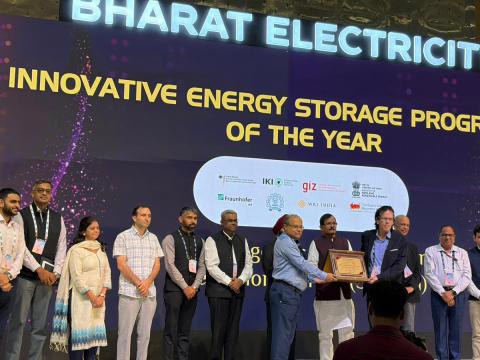
The initiatives were presented by the Energy Storage for Renewable Energy Integration in India (StoREin) project during Bharat Electricity, POWERGEN India and Indian Utility Week 2026, held at Yashobhoomi in New Delhi from September 1 to 3.
StoREin is led by India’s Ministry of New and Renewable Energy and implemented by the Deutsche Gesellschaft für Internationale Zusammenarbeit (GIZ) GmbH. It was commissioned by Germany’s Federal Ministry for the Environment, Climate Action, Nature Conservation and Nuclear Safety under the International Climate Initiative.
The project’s consortium partners include the Fraunhofer Institute for Energy Economics and Energy System Technology, IIT Bombay, The Energy and Resources Institute and World Resources Institute India.
Reports examine skills and technology requirements
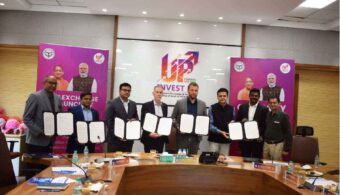
Two knowledge products developed under StoREin were released during the inaugural session of POWERGEN India 2026.
The first, titled Skill Gap Assessment in the Battery Energy Storage Sector in India, was developed by TERI. It examines workforce requirements across India’s battery energy-storage value chain and identifies gaps in the skills available among technicians and training institutions.
The assessment covers areas including battery installation, operation and maintenance, servicing, safety and system integration. It also reviews existing training capacity and recommends measures for developing a workforce equipped to support the country’s expanding battery energy-storage sector.
The second report, Global Energy Storage Systems: A Critical Technical Review, was prepared by the Grid Integration Lab at IIT Bombay.
It reviews international developments across energy-storage technologies, grid integration and control, standards, markets, sustainability, economics and deployment experience. The report is intended to help identify technological and regulatory considerations for power systems accommodating larger shares of renewable energy.
Urja Sanchay platform enters beta stage
The StoREin project also launched the beta version of its Urja Sanchay digital knowledge platform during the event.
The platform was unveiled by Bihar Energy Minister Shailesh Kumar, Central Electricity Authority Chairperson Ghanshyam Prasad, BSES Rajdhani Power Limited Executive Director Amal Sinha and Chief Executive Officer Abhishek Ranjan.
Urja Sanchay brings together an energy-storage dashboard, an e-learning platform, a digital library and a forum for stakeholder dialogue.
Its Urja Sangraha dashboard provides information on energy-storage capacity, technologies, deployment patterns and geographical distribution. The platform is designed for use by policymakers, utilities, researchers and other stakeholders working in the sector.
Discussions focus on commercial deployment
StoREin organised two technical sessions during the three-day event to examine how energy-storage research can be translated into demonstration projects and commercial deployment.
A session held on September 1 covered advanced battery chemistries, long-duration energy storage, power electronics, grid integration, safety, recycling and domestic manufacturing. Participants also discussed testing infrastructure, standards, certification, financing, technology transfer and cooperation between academia and industry.
A second session on September 2 examined the role of distributed storage in improving grid flexibility as rooftop and decentralised solar generation expands under programmes such as PM Surya Ghar: Muft Bijli Yojana and PM-KUSUM.
The discussion covered challenges including reverse power flows, voltage fluctuations, local network constraints and the mismatch between daytime solar generation and evening electricity demand. It also considered ownership and procurement models, regulatory frameworks, financing and the potential use of virtual power plants to aggregate distributed distributed storage resources.
Part of a longer Indo-German programme
StoREin is an ongoing bilateral project running from September 2022 to July 2029, with €17.5 million in funding from Germany’s International Climate Initiative.
The project is intended to strengthen the technical, regulatory and institutional conditions required for deploying energy-storage technologies at the distribution-grid level in India. Its work includes research, demonstration projects, policy support, workforce development and exchanges between Indian and international institutions.
As India adds more variable solar and wind capacity to its electricity system, storage is becoming increasingly important for balancing generation and demand, maintaining grid stability and reducing renewable-energy curtailment. The latest reports and digital platform extend Indo-German energy cooperation into the skills, knowledge and implementation requirements accompanying that transition.