Photo Credit: www.pib.gov.in
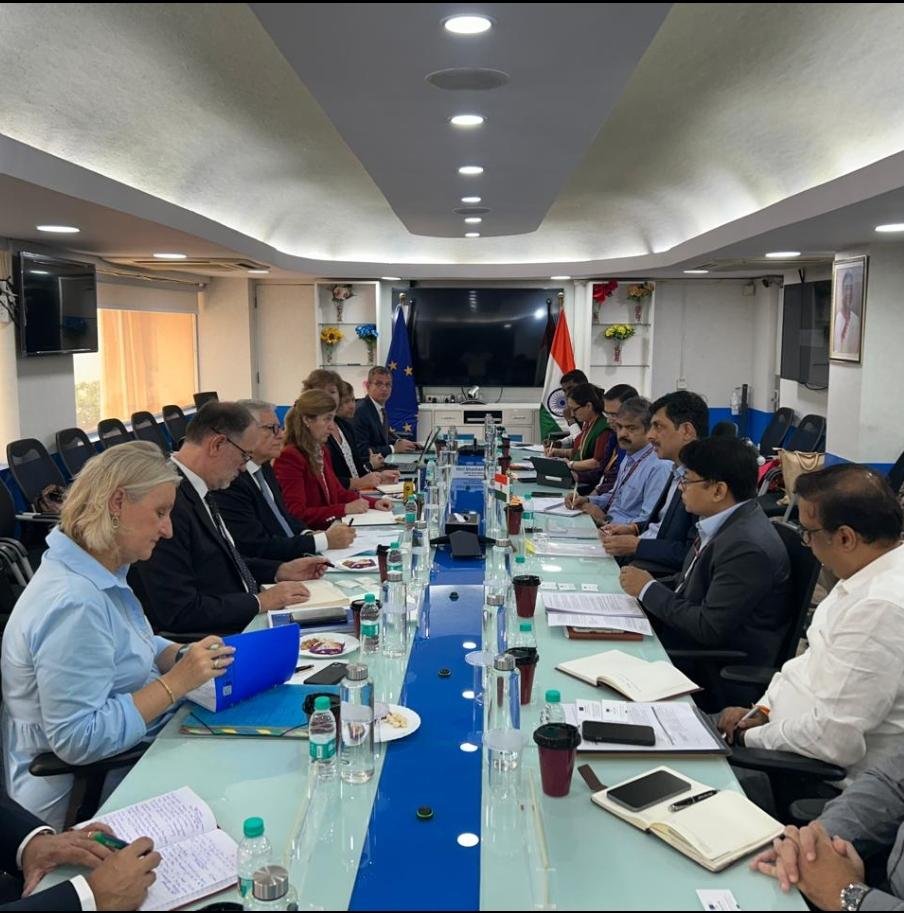
India and the European Union agreed to continue technical engagement on carbon pricing, emissions verification and the EU’s Carbon Border Adjustment Mechanism (CBAM) during a bilateral meeting in New Delhi on October 12, 2026.
Pankaj Agarwal, Secretary, Ministry of Power, met Gerassimos Thomas, Director-General for Taxation and Customs Union at the European Commission. Their discussions covered India’s developing carbon market and opportunities for technical cooperation.
Carbon pricing and verification on the agenda
Both sides expressed willingness to maintain engagement on recognition of carbon pricing mechanisms, monitoring, reporting and verification (MRV) systems, and capacity building.
“Both sides agreed to strengthen cooperation and facilitate continued dialogue on carbon markets, CBAM-related methodologies and other areas of mutual interest,” the Ministry of Power stated.
India outlines domestic carbon-market progress
The Power Secretary highlighted progress under India’s Carbon Credit Trading Scheme (CCTS), including notified emission-intensity reduction targets for 490 industrial units.
He also reported that non-fossil sources accounted for 308 GW of India’s 558 GW total installed electricity capacity. These figures concern installed capacity, rather than the share of electricity actually generated.
The EU delegation acknowledged India’s carbon-market progress and shared updates on CBAM implementation.
Why the discussions matter for trade
CBAM’s definitive regime began on January 1, 2026, following its transitional phase from 2023 to 2025. It covers selected imports in six sectors: cement, iron and steel, aluminium, fertilisers, electricity and hydrogen.
The mechanism links covered imports to their embedded carbon emissions. Its requirements include importer authorisation, emissions reporting, and the purchase and surrender of CBAM certificates. Certificate prices are linked to allowance auction prices under the EU Emissions Trading System.
For Indian producers supplying these goods to European customers, the framework makes emissions measurement and verification relevant to commercial relationships.
Technical engagement continues
The October 12 meeting keeps carbon-market cooperation on the India–EU agenda. The official announcement records willingness to continue discussions but contains no decision granting CBAM exemptions or recognising Indian verification bodies. Those implementation questions remain subjects for further engagement.