
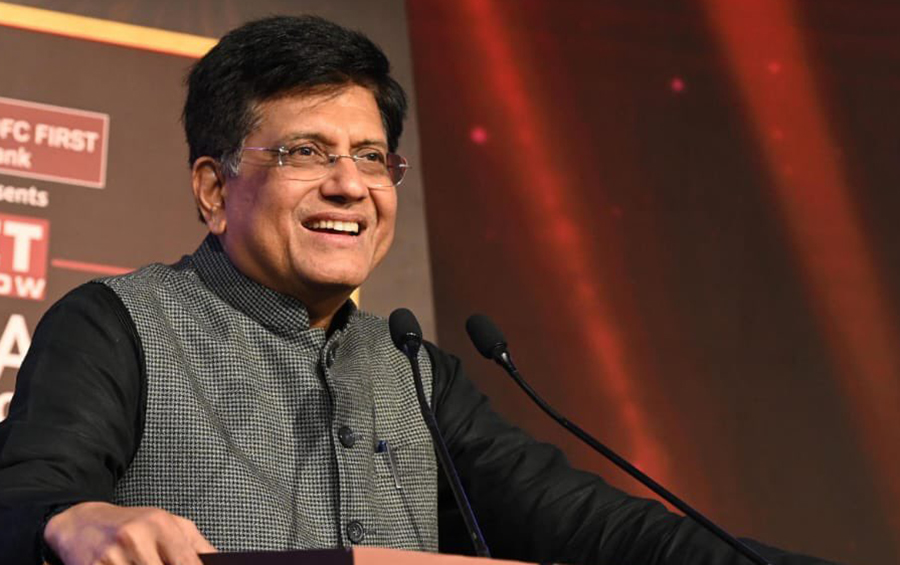
Union Commerce and Industry Minister Piyush Goyal has highlighted Germany’s demand for Indian workers, saying the country’s annual requirement exceeds 90,000 people.
Addressing the Fourth National Conference on India’s Industrial Transformation in New Delhi on 29 October 2026, Minister Goyal recalled a conversation with the German Foreign Minister about migration and workforce requirements. According to the Ministry of Commerce and Industry’s account, when he referred to Germany needing 90,000 Indians annually, he was told the country required substantially more Indian talent.
The remarks followed his Berlin visit, where engagements with government officials, business leaders, researchers and the Indian diaspora covered investment, industrial partnerships and the community’s contribution to bilateral relations.
Diaspora as a “living bridge”
During his interaction with the Indian community in Berlin on 23 October, Minister Goyal encouraged overseas Indians to help businesses identify partners, attract investment and secure export orders and service contracts.
He described the diaspora as a “living bridge” between India and Germany, highlighting how its professional experience and local connections could strengthen commercial ties. He also stressed the importance of private enterprise, citing India’s information technology industry as an example of growth supported by a facilitating government.
Minister Goyal praised the community’s work ethic and contribution to German society. He commended its peaceful conduct and encouraged members to maintain their connections with India while contributing to their country of residence.
India’s Ambassador to Germany, Ajit Vinayak Gupte, said the Indian community in Germany had crossed 332,000 people, with contributions across science, technology, finance and other sectors, according to ANI’s account of the interaction.
Trade hub proposal for Indian exporters
Responding to a community proposal for an Indian International Trade Hub in Germany, Minister Goyal said the government could support an overseas warehouse operated professionally by an industry or community association.
Such a facility could help Indian exporters, including small businesses, store products in Germany and supply European customers. He said an association would need to take responsibility for its operation, with arrangements covering financing, insurance, safety and security, and ensuring fair access for exporters.
Mentorship and opportunities for young people
Minister Goyal urged diaspora members to support children and young people in their hometowns and villages through mentoring, scholarships and career guidance. He suggested that professionals working in artificial intelligence and cybersecurity could offer online lessons to students in India.
He said young people should have opportunities to build good lives within India without having to move overseas for better prospects. Diaspora members could contribute by sharing their expertise and supporting education and skills development.
Linking these contributions to India’s goal of becoming a developed nation by 2047, Minister Goyal said government policy and infrastructure needed to be accompanied by public ambition and participation.
“We cannot manufacture ambition. That ambition, that drive will have to come from the people,” he said.
Students and community concerns
Community members raised the possibility of direct flights between Berlin and New Delhi, stronger support networks for Indian students and initiatives for young Indian-origin entrepreneurs, particularly in deep technology.
Education is an expanding part of the bilateral relationship. Figures highlighted by the German Academic Exchange Service (DAAD) India show that 69,816 Indian students were enrolled at German universities in the winter semester of 2025–26, making Indians the country’s largest international student group.
Business and research engagements in Berlin
Minister Goyal’s Berlin programme also included meetings with Bernd Montag, Chief Executive Officer of Siemens Healthineers AG, and Carsten Coesfeld, a member of Bertelsmann’s Executive Board and Chief Executive Officer of Bertelsmann Investments.
He held discussions with Levin Holle, Economic and Financial Policy Advisor and G7/G20 Sherpa at the German Federal Chancellery. The engagements covered investment, industrial cooperation and opportunities to strengthen the economic partnership, according to the Ministry of Commerce and Industry.
Separately, Minister Goyal met Indian science and technology researchers and students in Germany and participated in discussions with Fraunhofer institutes. Areas examined included microelectronics, power electronics, logistics, smart manufacturing and battery technologies. The discussions focused on research cooperation and connections between industry and academia in the two countries.
Skilled mobility within the wider partnership
Workforce cooperation has an established place in India–Germany relations. The two countries signed their Migration and Mobility Partnership Agreement in 2022, while Germany adopted an India-specific Skilled Labour Strategy in October 2024.
The German strategy identifies India as an important partner in addressing skilled-worker shortages associated with an ageing population and changes in industry and technology. The wider cooperation includes efforts to improve recruitment information and access to German-language learning.
Minister Goyal’s recent engagements reflect these interconnected strands of the relationship: Indian professionals working in Germany, students entering its universities, diaspora members supporting commercial links, and institutions pursuing joint research and industrial cooperation.