
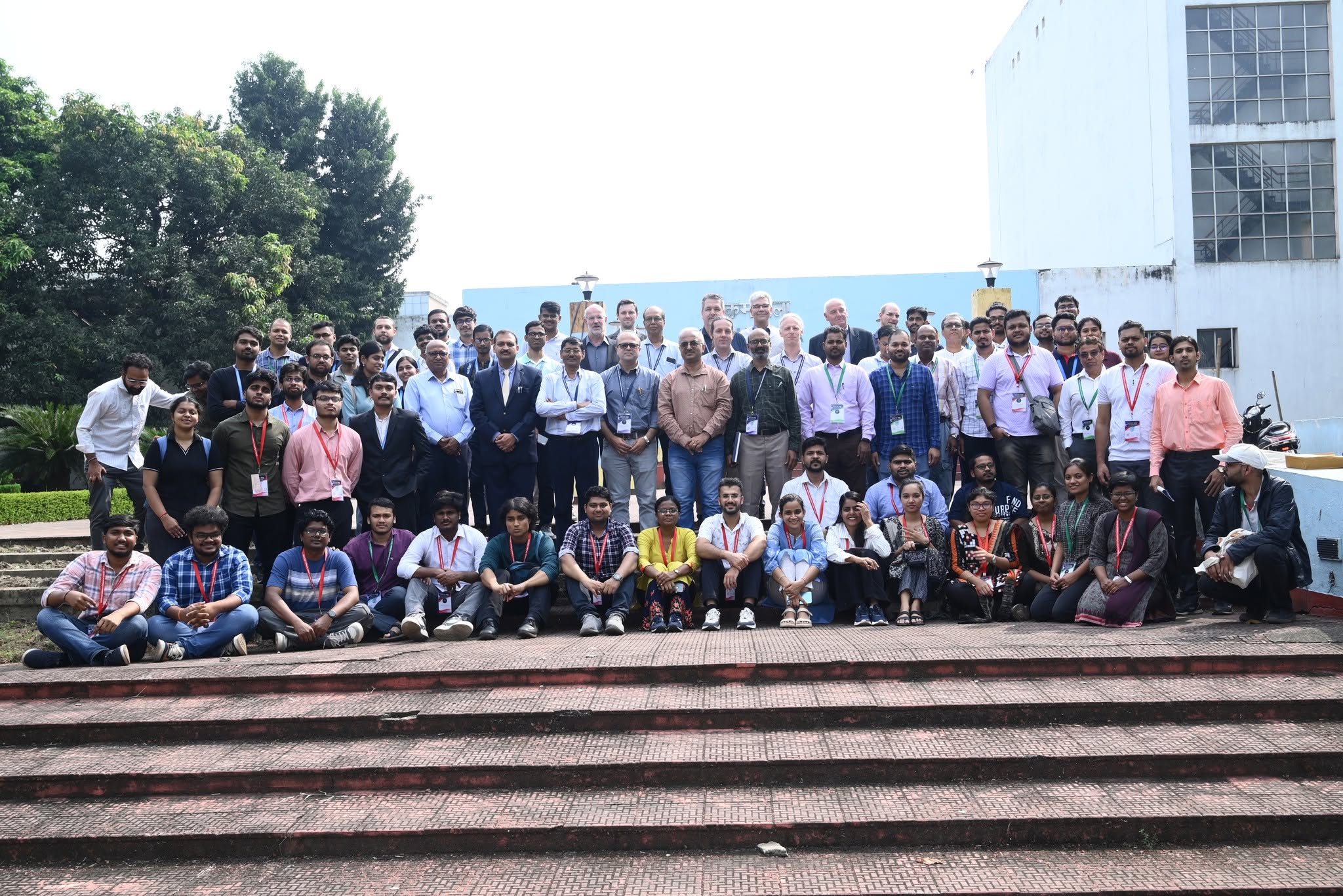
Photo: Cryogenic Engineering Centre
The Cryogenic Engineering Centre at the Indian Institute of Technology (IIT) Kharagpur and Germany’s Leibniz Institute for Solid State and Materials Research (IFW Dresden) jointly organised the Indo-German Conference on Cryogenics for Sustainable Technologies from 9 to 11 November 2026. Held at the Gargi Auditorium on the IIT Kharagpur campus in West Bengal, the conference covered technologies that use extremely low temperatures, from liquid hydrogen storage to superconducting components for quantum computers.
Prof. Parthasarathi Ghosh, Head of the Cryogenic Engineering Centre, chaired the organising committee. Prof. Venimadhav Adyam of IIT Kharagpur and Prof. Dirk Lindackers of IFW Dresden served as convenors. The programme included invited lectures, technical sessions and student presentations. The organisers listed speakers from IIT Bombay, IISER Kolkata and the Bhabha Atomic Research Centre, as well as from scientific instrument and vacuum technology companies in Dresden.
Why liquid hydrogen needs cryogenic engineering
Hydrogen is cooled to about −253°C to turn it into a liquid. Even in an insulated tank, heat entering from outside can cause some of the liquid to evaporate. Managing this loss, known as boil-off, was among the conference themes, alongside the equipment used to pump and transfer cryogenic liquids. The programme also covered refrigeration systems that cool superconducting qubits, a type of building block for quantum computers.
Earlier Indo-German work at IIT Kharagpur
Established in 1976, the Cryogenic Engineering Centre offers master’s and doctoral programmes. IIT Kharagpur says earlier cooperation with Germany helped modernise its research facilities and equipment for producing cryogenic liquids. The centre also established a laboratory for applied superconductivity and vacuum technology under Indo-German cooperation to train educators and industry personnel.
Scientific exchange between IIT Kharagpur and IFW Dresden also preceded the November conference. IFW Dresden’s seminar programme listed Prof. Venimadhav Adyam for a talk on advanced magnetic materials for cryogenic applications on 24 August 2026.
How IFW Dresden tests superconducting magnetic bearings
At its Applied Superconductivity Laboratory, IFW Dresden develops and tests magnetic bearings that use superconductors to support moving parts without physical contact. Researchers measure how much lifting force the bearings generate and how they respond to movement. The laboratory’s electric coolers can reach 20 kelvin, or about −253°C.
The organisers have posted links to the abstract booklet and recordings from all three days on the conference website.
Note: The magnetic bearings example comes from IFW Dresden’s published laboratory description. Individual conference abstracts remain unverified.