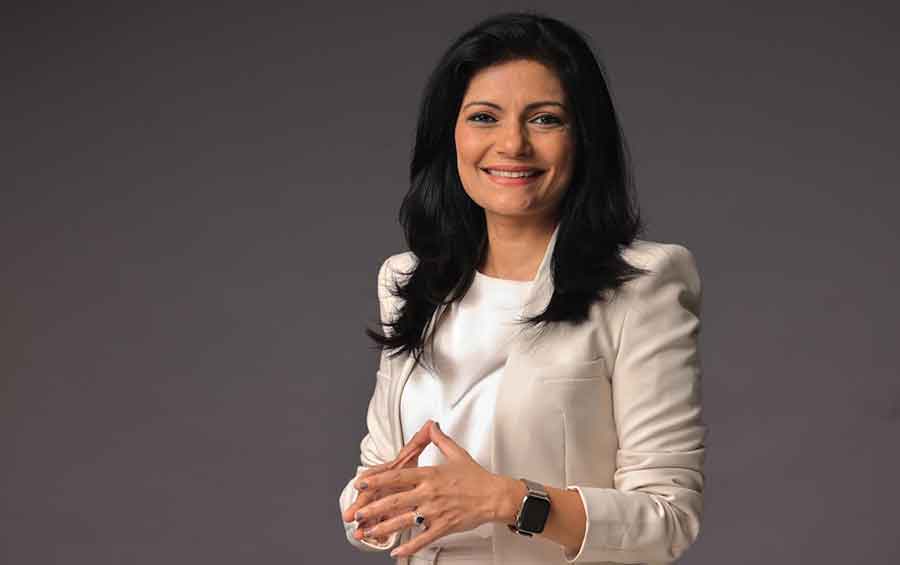
At the intersection of technology, industry and global collaboration, Sindhu Gangadharan has emerged as a key voice shaping India-Germany ties today. As Managing Director of SAP Labs India and President of the Indo-German Chamber of Commerce (IGCC), she brings a combination of industry leadership and bilateral engagement at a time when the partnership is expanding into new frontiers such as AI, green technologies, and digital ecosystems.
Her appointment to the IGCC presidency in 2025 builds on a career that has spanned both technology leadership and cross-border collaboration, including extensive experience within SAP’s global ecosystem. Since then, her tenure has coincided with a broader shift in India-Germany relations; from traditional trade and manufacturing linkages to a more innovation-led, talent-driven partnership.
With both countries deepening cooperation in areas such as Industry 4.0, sustainability, and workforce mobility, the emphasis is increasingly on co-creation rather than collaboration alone. In this conversation, the editor of TheDialog spoke with Gangadharan on how technology, skills, and inclusive growth could shape the next phase of this strategic partnership.
As President of the Indo-German Chamber of Commerce, what are your key priorities in strengthening this partnership today?
As President of the Indo-German Chamber of Commerce, my focus is on building on the strong foundation that already exists between India and Germany. I see this role as an opportunity to support closer collaboration between businesses in both countries, particularly across sectors such as technology, manufacturing, automotive, and chemicals. Encouraging innovation and digital collaboration remains important, especially where India’s talent and technology strengths can work alongside Germany’s engineering and industrial expertise.
Sustainability and workforce development continue to guide our efforts, with attention on green technologies, resilient supply chains, and future-ready skills. I look forward to working closely with members and stakeholders to further strengthen this long-standing partnership in a practical and outcome-oriented way.
IGCC is one of the largest bilateral chambers in India. Where do you see the biggest opportunities for Indo-German cooperation in the coming years?
The Indo-German Chamber of Commerce (IGCC) stands as a powerful platform for fostering bilateral cooperation, with immense potential in the fields of AI and technology. Both India and Germany are global leaders in innovation, and AI presents a transformative opportunity for deeper collaboration. India’s dynamic tech ecosystem and Germany’s industrial strength can together accelerate AI development, deployment, and adoption, create cutting-edge solutions, and drive digital transformation across industries.
In the coming years, AI and related technologies such as machine learning, data analytics, and automation will be central to areas like manufacturing, automotive, healthcare, and smart cities. Leveraging complementary strengths, the two countries can jointly address global challenges through technology innovation and skill development. Moreover, emerging fields like green tech and Industry 4.0 provide additional grounds for partnership, combining Germany’s sustainability expertise with India’s scalable innovation capacity.
IGCC can play a critical role in facilitating knowledge exchange, joint ventures, and strategic investments to unlock these opportunities. By promoting collaboration in AI and tech, the Indo-German partnership will not only drive economic growth but also foster inclusive, future-ready industries that benefit both nations globally.
With Germany’s strong focus on sustainability and innovation and India’s rapid digital adoption, how can the two countries work together in areas like tech, mobility, and digital transformation?
Germany’s strength in engineering, sustainability, and industrial innovation complements India’s scale, digital maturity, and growing technology talent base. Together, the two countries can co-develop solutions that combine precision with scalability, whether in AI-driven manufacturing, connected mobility, or clean energy infrastructure. In mobility, for instance, German expertise in electrification and systems design can align with India’s rapid adoption of e-mobility and smart urban transport.
Equally, in digital transformation, joint innovation hubs and R&D partnerships can advance work in AI, cloud, and Industry 4.0 applications, ensuring that new technologies are both secure and sustainable. For this collaboration to thrive, enabling frameworks, from standards and data governance to joint skill-building, will be essential. With complementary strengths and shared ambitions, Indo-German cooperation has the potential to set global benchmarks for technology-led, sustainable growth.
As the head of SAP Labs India, how do you see technology and innovation shaping Indo-German partnerships, particularly in AI, Industry 4.0, and cloud solutions?
Technology and innovation are at the heart of the Indo-German partnership, especially in areas like agentic AI, Industry 4.0, and cloud solutions. India’s rapidly growing digital ecosystem and skilled workforce complement Germany’s engineering excellence, creating unique opportunities for collaboration. In AI, we see scope for co-developing solutions that optimize industrial processes, enhance predictive capabilities, and drive smarter decision-making.
Industry 4.0 initiatives can benefit from integrating German precision engineering with India’s software and cloud expertise, enabling scalable and efficient manufacturing and supply chain solutions. Meanwhile, cloud adoption provides the foundation for seamless collaboration, real-time insights, and innovation across borders. Together, these technologies not only strengthen business outcomes but also set the stage for sustainable, future-ready Indo-German partnerships.
German “Mittelstand” (SMEs) companies are keen on expanding in India. What role can IGCC play in making their entry and integration smoother?
The IGCC plays a critical role in enabling German Mittelstand companies to enter and succeed in India. We act as a strategic bridge, offering market insights, regulatory guidance, and connections to local partners, suppliers, and skilled talent. Through trade missions, networking forums, and tailored advisory services, we help companies navigate challenges such as compliance, bureaucracy, and market dynamics.
Beyond easing entry, we focus on long-term integration, supporting companies in establishing operations, building local teams, and scaling sustainably. Our aim is to ensure that German Mittelstand firms can fully leverage India’s growth potential while fostering enduring, mutually beneficial partnerships.
You are the first woman leader from the tech sector to hold this position. How do you plan to bring diversity and inclusion into the chamber’s agenda?
Diversity and inclusion is central to the Chamber’s work, shaping programs and initiatives at every level. Ensuring that women founders, technologists, and leaders are visible in trade missions, innovation forums, and speaker panels is a key priority, so that their perspectives are integrated into strategic discussions.
Equally important is creating pathways for mentorship, sponsorship, and leadership development, partnering with companies and educational institutions to help women advance in STEM and technology leadership roles. Supporting career re-entry, flexible work models, and childcare-friendly policies will further enable talented professionals to sustain and grow their careers.
Beyond internal programs, the Chamber will act as a platform for sharing best practices across German and Indian firms, promoting metrics, accountability, and transparency in inclusive workplace policies. Engaging early-stage talent through STEM education initiatives, scholarships, and internships will help cultivate the next generation of women leaders in technology.
Talent development and workforce mobility are pressing issues. What can India and Germany do together to create future-ready talent?
We must de-risk mobility and make skills portable. Practical steps include scaling bilateral vocational and apprenticeship programmes aligned with German dual-training standards; creating accredited short-cycle programmes in green technologies, cloud engineering, and mechatronics co-designed by industry; and expanding language and cultural immersion tracks for mobility into German factories and R&D centres.
Mutually recognized certification frameworks will be critical so that skills acquired in India map directly to German job requirements. Public-private investment, including targeted funding for training hubs, will be essential to bridge the gap quickly. These measures can significantly improve placement outcomes and enable two-way talent flows that benefit both labour markets.
Looking ahead five years, what does success in Indo-German business and innovation partnerships look like to you?
Success is tangible, measurable and mutually beneficial. First, a clear increase in deep-tech joint ventures and co-developed products exported from India and Germany to global markets. Second, a demonstrable green industrial ecosystem, scaled hydrogen projects, cleaner mobility deployments, and low-carbon manufacturing initiatives co-developed by both countries.
Third, institutionalised talent pathways, with thousands trained under joint programmes and higher mobility rates for skilled professionals. If we can point to projects that have created high-quality jobs, reduced emissions, and unlocked new market opportunities, we will have moved from partnership rhetoric to partnership reality.