Photo Credit: PIB
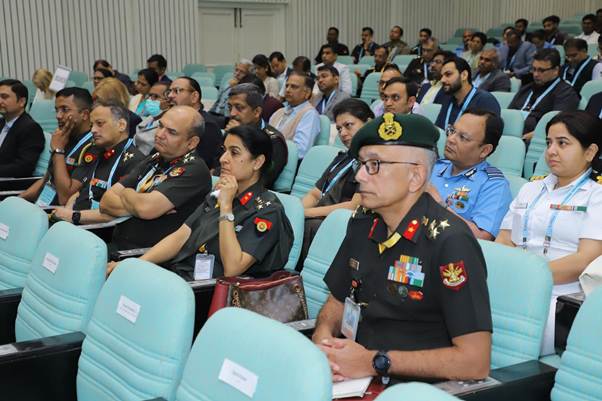
The Indo-German Science & Technology Centre (IGSTC) Strategic Conclave 2026 on “Mobile Health & Telemedicine” convened policymakers, scientists, defence officials, industry leaders and healthcare experts at Vigyan Bhawan on Monday, 23 February, setting the stage for deeper India–Germany collaboration in digital health innovation.
The high-level gathering focused on accelerating the shift from pilot telemedicine initiatives to scalable, secure and sustainable healthcare solutions, particularly for remote, high-altitude and underserved populations.
Building a Unified Innovation Platform
Dr. Kusumita Arora, Director of IGSTC, described the conclave as a crucial platform bringing together stakeholders from government, healthcare, academia and industry.
She underlined that meaningful dialogue across these pillars of the innovation ecosystem is vital to move beyond research conversations toward co-creating practical solutions to unresolved technical challenges in health technologies.
According to her, only sustained engagement between policy architects, scientists and industry can unlock transformative breakthroughs in digital health delivery.
Telemedicine in Armed Forces: From Consultation to Satellite Platforms
Surg Vice Admiral Dr. Arti Sarin, Director General Armed Forces Medical Services (DGAFMS), highlighted the strategic significance of telehealth in military healthcare, which serves nearly 1.6 crore personnel, veterans and their families.
Tracing its evolution, she noted that telemedicine has advanced from basic real-time consultations to sophisticated satellite-enabled systems supporting maritime deployments and high-altitude operational zones.
To strengthen operational resilience, Dr. Sarin called for secure and encrypted communication systems, wearable health monitoring devices, AI-enabled diagnostic tools and clear regulatory and ethical frameworks.
She stressed that telehealth applications in sensitive operational environments must be robust, secure and ethically governed to ensure reliability and patient safety.
Biotechnology and Startup Ecosystem at the Core
Dr. Jitendra Kumar, Managing Director of Biotechnology Industry Research Assistance Council (BIRAC), underscored biotechnology’s growing role in powering digital health innovation.
He highlighted the need to nurture startups operating at the intersection of diagnostics, digital platforms and medical devices through structured funding, mentorship and regulatory facilitation.
Dr. Kumar emphasised that sustained support mechanisms would help retain domestic talent and convert indigenous innovations into accessible healthcare solutions. He further observed that partnerships with German institutions could enable the co-creation of technologies tailored to India’s diverse healthcare landscape while leveraging global expertise and quality benchmarks.
Integrating Telemedicine into National Health Architecture
Dr. Sunita Sharma, Director General of Health Services (DGHS), spoke about embedding telemedicine within India’s expanding digital health ecosystem under the National Digital Health Mission.
She stated that telemedicine services now extend to the Ayushman Mandir level, significantly expanding healthcare access in rural and underprivileged areas.
Dr. Sharma highlighted the role of Artificial Intelligence, machine learning and point-of-care diagnostics in strengthening national programmes such as tuberculosis eradication. At the same time, she called for robust regulatory safeguards, strong data privacy protections and sustainable financing models to prevent misuse and ensure equitable access.
Industry Calls for Translational Momentum
From an industry perspective, Mr. Pavan Chaudhary, Chairman of the Medical Technology Association of India, emphasised the need to prioritise translational research and create incentive-driven frameworks that bridge the gap between laboratory innovation and market deployment.
Echoing this sentiment, Dr. Arindam Bhattacharyya from the Department of Science and Technology (DST) stressed the importance of building integrated innovation ecosystems that align scientific research with public health priorities.
He urged stakeholders to ensure that mobile health and telemedicine technologies evolve beyond experimental pilots into scalable platforms capable of addressing systemic healthcare challenges across India’s diverse geography. DST, he noted, plays a pivotal role in fostering collaborative research, supporting translational pathways and enabling partnerships between academia, startups and industry.
Deep-Tech Focus and Regulatory Deliberations
Throughout the conclave, participants deliberated on emerging technologies including AI-enabled diagnostics, remote patient monitoring systems, wearable health devices and chip-based laboratory services.
Discussions also addressed regulatory harmonisation, data protection frameworks, financing strategies and mechanisms to bridge the digital divide.
There was broad consensus on the need for structured bilateral research programmes, long-term R&D roadmaps and strengthened industry-academia collaboration to accelerate deep-technology solutions aligned with India’s socio-economic realities.
Commitment to Inclusive Digital Healthcare
The conclave reaffirmed the commitment of DST, BIRAC, IGSTC and partner institutions to positioning mobile health and telemedicine as secure, inclusive and innovation-driven pillars of India’s future healthcare system.
By deepening Indo-German collaboration and aligning technological innovation with public health priorities, the event underscored India’s ambition to lead in digital health solutions that combine technological excellence with equitable access.