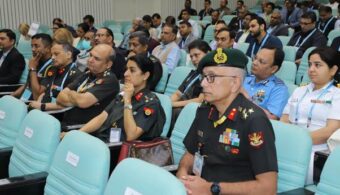
India and Germany convened a high-level roundtable in the capital on Thursday, bringing together policymakers, public transport leaders, industry experts, financiers, and international stakeholders to chart the next phase of India’s electric mobility transition. The ninth edition of the GSDP Conversation Series, held at Maharashtra Sadan on 4 December, focused on “Electric Mobility: From System Integration to Skills Development.”
Officials from both countries underscored that India’s ambitious e-mobility goals can only be achieved through coordinated planning across energy, transport, manufacturing, finance, and workforce development—moving beyond small pilots to an ecosystem-wide shift.
India–Germany Partnership Places Integrated E-Mobility at the Centre of Climate Action
The roundtable reaffirmed that strengthening coordination between the central government, states, and cities is essential for seamless e-mobility implementation. Speakers highlighted that Indo-German cooperation—built on decades of collaboration in public transport modernisation, renewable energy, urban development and vocational training—offers a strong foundation to jointly advance next-generation mobility solutions.
During her keynote address, Christine Toetzke, Director General for Asia, Latin America, Middle East & Eastern/Southeastern Europe at Germany’s Federal Ministry for Economic Cooperation and Development (BMZ), emphasised the strategic importance of the partnership.
“Germany and India share a long-standing partnership rooted in trust, ambition, and a shared vision for a greener future,” Toetzke said. “Electric mobility is not merely a technological shift, it is a transformation of how our societies move, how we design our cities, and how we create opportunities for future generations.”
She added that Germany stands ready to support India with system-level planning, vocational skills, battery innovation and circular economy solutions: “Our cooperation is a long-term investment in cleaner air, safer mobility, and more equitable access to opportunity for all.”
A Multi-Ministerial Push: India’s Recent Policy Framework
Officials outlined major national initiatives shaping India’s e-mobility transition in recent years:
- PM eDrive Scheme (₹10,900 crore): Vehicle electrification and charging infrastructure
- PM eBus Sewa: Deployment of 10,000 electric buses through PPP models
- Payment Security Mechanism (₹3,435 crore, 2024): De-risking large-scale e-bus operations
- Charging Infrastructure Guidelines 2024 (Ministry of Power & BEE): Standards for interoperability, tariffs, safety and smart charging
Senior government representatives noted that while the policy foundation is strong, India now requires system-wide solutions combining depot electrification, DISCOM coordination, multimodal integration and skilled workforce development.
Panel Discussion: System Integration, Financing, Workforce Readiness
The session on “Electric Mobility – From System Integration to Skills Development” featured:
Mr. Promod R, Head of Marketing, Strategy & Innovation, Bosch Mobility India
Ms. Mahua Acharya, Co-Founder, Intent Platform; former CEO, CESL
Ms. Meenu Sarawgi, Chief of Strategy & Operations, Automotive Skills Development Council
Moderated by:
Ms. Swati Khanna, Senior Sector Specialist – Transport, KfW
Mr. Manjunath Chande, Project Director, SUM-ACA (GIZ)
Speakers stressed the need to align national-level programmes with on-ground delivery capacity, especially as cities move into large-scale bus electrification and commercial EV deployment.
Key Themes Discussed
1. Multimodal Electrification
Participants highlighted the need to integrate metro networks, bus services, shared mobility and last-mile transport into a unified electric transport ecosystem.
2. Charging Infrastructure & Grid Readiness
DISCOM coordination, land availability, grid capacity, charger standardisation, and battery safety/circularity were identified as critical enablers.
3. Financing & Procurement
Officials and financiers called for improved contract structures, risk-sharing mechanisms, payment security and innovative financing models to scale e-bus and commercial EV adoption.
4. Skills & Gender Inclusion
India faces shortages in EV engineering, charger installation, battery management, digital mobility services and safety training. Strengthening vocational pathways and expanding opportunities for women were identified as priority areas.
5. Indo-German Collaboration
Future cooperation will focus on grid management, multimodal planning, battery circularity, standardisation frameworks and vocational skill-building.
Shared Commitment to Clean, Inclusive Mobility
Stakeholders emphasised that the GSDP platform remains vital for coordinated action across ministries, states, cities, industry and development partners. Both sides agreed to advance aligned, scalable and socially inclusive mobility solutions as India accelerates toward its climate and transport goals.
About GSDP
Launched in 2022, the Indo-German Partnership for Green and Sustainable Development (GSDP) is a strategic cooperation framework supporting sustainable, climate-aligned development. It advances solutions that contribute to the UN Sustainable Development Goals and the Paris Agreement.