
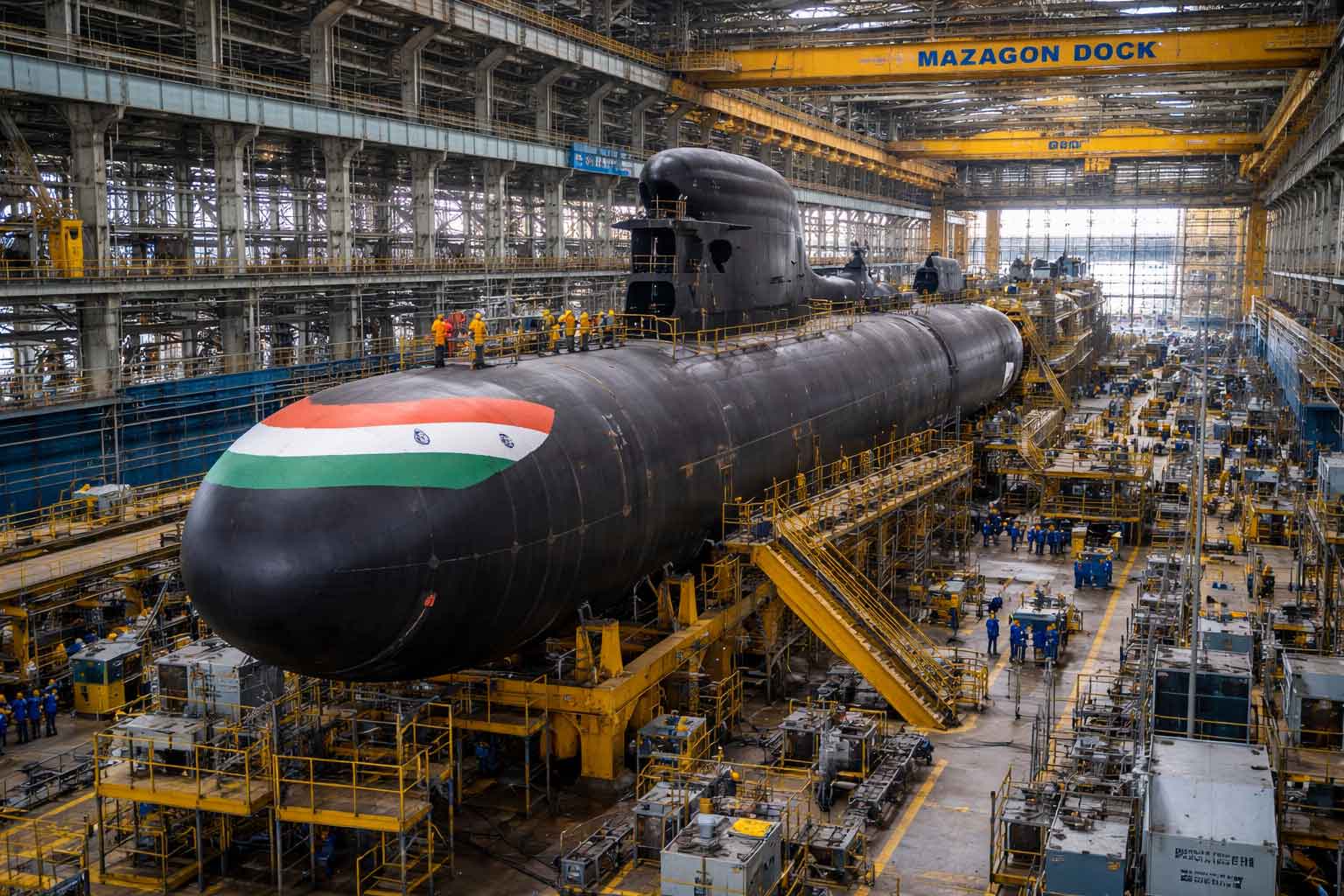
According to media reports, India and Germany are close to finalising an estimated $8 billion (₹70,000–72,000 crore) agreement under Project-75(I) for the domestic construction of six advanced conventional submarines, a deal poised to become the largest defence contract in India’s history.
The agreement, which has reached an advanced stage of negotiations, is expected to be signed by the end of March, marking a significant milestone in Indo-German defence and strategic cooperation, the reports said.
Boost to Navy’s Underwater Capabilities
The long-delayed Project-75I is aimed at addressing the ageing conventional submarine fleet of the Indian Navy and significantly strengthening its underwater warfare and maritime deterrence capabilities. The programme assumes added strategic importance at a time when China and Pakistan are expanding their naval footprint in the Indian Ocean Region and the wider Indo-Pacific.
Once concluded, the deal will surpass the ₹58,000-crore contract signed with France in September 2016 for 36 Rafale fighter jets, making it India’s biggest defence procurement to date.
Advanced Submarines With AIP Technology
Under the project, India plans to acquire six next-generation diesel-electric attack submarines based on Germany’s Type-214 platform, which is known for its fuel-cell-based air-independent propulsion (AIP) technology.
According to the reports, this AIP system allows submarines to remain submerged for weeks instead of days, drastically reducing detection risks and offering a significant tactical advantage during extended underwater operations.
Make in India Focus, Technology Transfer Likely
The submarines are proposed to be built in India by Mazagon Dock Shipbuilders Ltd (MDL) in partnership with Germany’s ThyssenKrupp Marine Systems (TKMS) under the strategic partnership model.
Media reports indicate that the project targets 45–60% indigenisation, in line with the government’s Make in India initiative, and could include critical technology transfer for submarine construction.
The deal reportedly gained momentum during the January 12–13 India visit of German Chancellor Friedrich Merz, which is said to have provided a decisive political push to the negotiations.
Timeline and Procurement Background
The procurement of six submarines under Project-75I was first approved by the Defence Acquisition Council in October 2014. Subsequently, the Ministry of Defence issued the Request for Proposal (RFP) on July 20, 2021, seeking AIP-equipped conventional submarines for the Navy.
At present, the Indian Navy operates around a dozen Russian-origin submarines along with six newer French-built Scorpène-class submarines.
Industrial and MSME Ecosystem Set to Benefit
Beyond its strategic and military implications, the submarine programme is expected to provide a significant boost to India’s shipbuilding and defence manufacturing ecosystem. Media reports suggest that the project will particularly benefit micro, small and medium enterprises (MSMEs) by fostering a domestic supply chain for submarine systems, components, spares and specialised equipment.
Naval Indigenisation Drive Gains Momentum
The Project-75I agreement aligns with the government’s stepped-up push to implement the Indian Naval Indigenisation Plan 2015–2030. Under this plan, 51 major naval vessels valued at approximately ₹90,000 crore are currently under construction in Indian shipyards.
Since 2014, Indian shipyards have delivered over 40 indigenous warships and submarines to the Navy. In the past year alone, a new naval platform has been inducted, on average, every 40 days, reflecting the accelerated pace of domestic naval production.
If finalised as expected, Project-75I is set to become a cornerstone of India’s maritime strategy and a defining chapter in the evolving India–Germany defence partnership, according to media reports.