
India made a confident start at the Berlin International Film Festival (Berlinale) 2026, with the official inauguration of the India Pavilion at the European Film Market (EFM), signalling a focused push towards international co-productions, content partnerships and cultural exchange.
The Berlinale, now in its 76th edition, is being held in Berlin from February 12 to February 22, 2026, while the European Film Market—one of the world’s most influential film markets—runs from February 13 to February 19, 2026, bringing together thousands of producers, buyers, distributors, sales agents and financiers from across continents.
India Pavilion Inaugurated at EFM
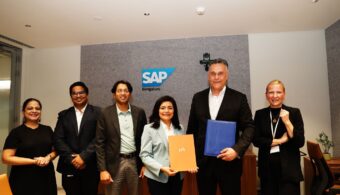
The India Pavilion was inaugurated by Ajit Gupte, India’s Ambassador to Germany, along with officials from the National Film Development Corporation (NFDC) and the Indian Embassy.
Also present were Trisha Sakhlecha, Director of The Tagore Centre, Berlin; IFFI Artistic Director Pankaj Saxena; and Peter Domsch.
Located prominently at the entrance of the European Film Market at the Martin Gropius Bau, the India Pavilion’s bold purple branding ensured high visibility, reflecting India’s intent to project itself as a globally engaged creative economy.
Market Engagement and State Participation
Despite inclement weather on the opening day, the India Pavilion recorded steady engagement, with Indian filmmakers, producers, startups and entrepreneurs holding meetings with international buyers, distributors and co-production partners.
Complementing the national presence, the Maharashtra and Delhi state governments have also set up dedicated stalls at EFM, officially promoting their regions as film-friendly destinations offering infrastructure, incentives and production ecosystems.
Indian Films Showcased at Berlinale 2026
India’s official selection at Berlinale 2026 highlights independent cinema, regional storytelling and experimental formats across sections:
- Not a Hero, directed by Rima Das (Generation Kplus), following an 11-year-old boy adjusting to life after displacement from the city to rural Assam.
- Members of the Problematic Family, directed by R Gowtham (Forum), a Tamil-language film exploring grief, memory and familial loss.
- A Circle as the Center of the Whole (Forum Expanded), a short film reflecting on precarity and archaeology in and around Delhi.
- Abracadabra (Generation Kplus), a short film set largely on a school bus, examining childhood friendships and prejudice.
- Flying Tigers, directed by Madhusree Dutta (Forum Documentary), a genre-blending docu-fiction combining interviews, archival material, animation and performance.
- In Which Annie Gives It Those Ones (Berlinale Classics), the restored 1990 cult film associated with Arundhati Roy, returning to international screens through the festival’s Classics programme.
Berlinale’s Global Role and India–Germany Cultural Ties
The Berlinale received over 8,000 film submissions from across the world this year, according to festival organisers, reinforcing its position as one of the most competitive and politically engaged film festivals globally. Alongside screenings, the festival hosts the European Film Market, the Berlinale Co-Production Market and the World Cinema Fund—key platforms for financing, collaboration and cultural exchange.
For India, participation at Berlinale extends beyond film visibility. In the context of India–Germany relations, cultural platforms such as Berlinale deepen people-to-people ties and foster long-term mutual understanding, complementing cooperation in trade, technology and innovation. India’s presence at Berlinale 2026 underscores culture as a strategic pillar of the bilateral relationship—rooted in dialogue, diversity and shared creative values.