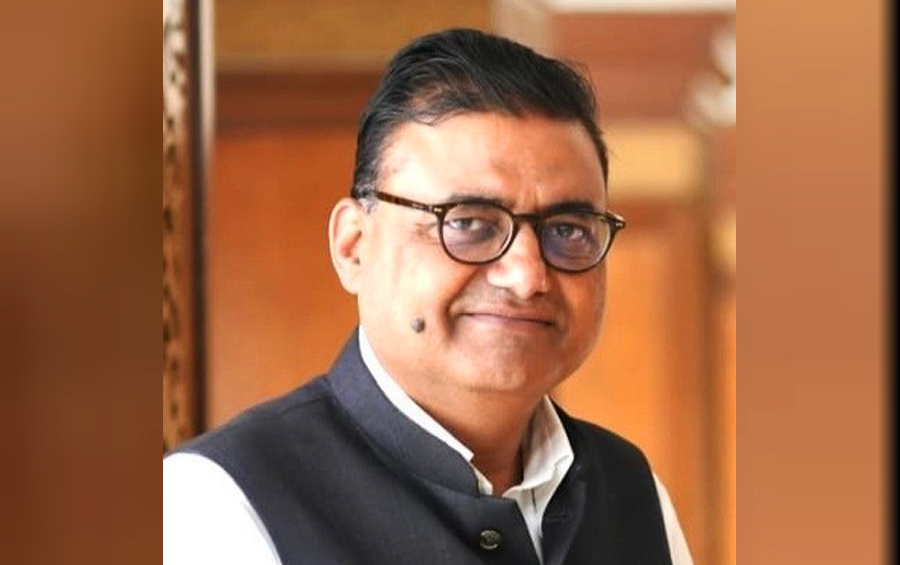
When Rakesh Veauli first travelled from Nashik to Germany in 2006, it was simply to attend Automechanika in Frankfurt, one of the world’s largest automotive trade fairs. What began as a single exhibition visit soon evolved into a long entrepreneurial journey linking Indian manufacturing capabilities with Germany’s precision-driven engineering ecosystem.
Nearly two decades later, Veauli operates at the intersection of German precision engineering, automotive supply chains and Indian manufacturing networks. Based near Hamburg, he has spent years building relationships between German manufacturers and Indian component suppliers while working closely with global automotive quality systems.
Alongside running his business, Veauli is also an IATF automotive auditor, contributing to quality and compliance frameworks that underpin modern automotive manufacturing.
In this conversation with Pooja Chaturvedi Sah for TheDialog, he reflects on the evolution of Indian manufacturing, the growing interest of German companies in Indian suppliers, and how engineering capability, digitalisation and entrepreneurial mindset are shaping the next phase of Indo-German industrial collaboration.
You first travelled to Germany in 2006. What brought you here, and how did that visit shape your business journey?
My first visit to Germany was in 2006, when I attended the Automechanika exhibition in Frankfurt, one of the most important global exhibitions for the automotive aftermarket industry.
At the exhibition I met my first German customer, who was based in Hamburg. After the exhibition he invited me to visit his office there, and that meeting became the starting point of my business connections with Germany.
Until then, I had never travelled outside India. But Germany did not feel unfamiliar because I already had a large extended family living here. Two of my uncles—my father’s brothers—have been in Germany since 1978, and over time our family here has grown significantly.
Today we have more than 100 relatives in Germany, and I often say that we are probably the largest Indian family in Germany.
When I travelled from Frankfurt to Hamburg to meet my first customer, more than 30 relatives came to receive me, some of whom I was meeting for the first time. That made the transition much easier and gave me a strong sense of belonging.
How did that first connection evolve into a sustained Indo-German manufacturing relationship?
After returning to Nashik, one of my close friends wanted to purchase a laser cutting machine from Germany. Since I had already visited Germany and had family connections here, he asked me to support him.
That led to my second visit within four weeks, and within the first six months I travelled to Germany four times.
Gradually we began building a customer base. Initially we had five German customers, and the manufacturing work was carried out at our facility in Nashik. From there we supplied metal components and precision parts to these companies.
Later, in 2009, we formally established a business presence in Germany together with my uncle. We started with a small rented office and a staff member managing communication with customers.
Eventually, in 2011, I moved to Germany with my family and settled near Hamburg in Ahrensburg, where I continue to operate today.
You have worked closely with both German engineering systems and Indian manufacturing companies. How has Indian manufacturing evolved over the years?
When I first began working with German companies, there was a clear trust gap regarding Indian suppliers.
German manufacturers operate within extremely structured production environments where precision engineering, process control and documentation standards are critical. Earlier many buyers felt Indian suppliers struggled with consistency in these areas.
However, over the last decade, the situation has changed significantly.
Indian manufacturers have invested heavily in advanced machinery, process automation and quality systems. Many companies now operate at standards comparable with international suppliers, especially in precision metal components and automotive parts.
Earlier India was largely viewed as a service-driven economy, especially because of the IT sector. Manufacturing was not always associated with India globally.
But today German companies increasingly see India as a capable engineering and manufacturing partner, particularly in automotive components, machining and precision engineering.
You are also an IATF automotive auditor. What role do quality systems play in Indo-German supply chains?
In 2017, I completed the qualification to become an IATF automotive auditor. As far as I know, I became the first Indian IATF auditor based in Germany, and possibly the first in Europe.
Quality systems are extremely important in the automotive industry. German automotive companies work with highly structured supply chains where suppliers are expected to meet strict quality and process standards.
For Indian manufacturers who want to work with German OEMs or Tier-1 suppliers, it is essential to implement strong quality management systems, reliable production processes and proper documentation.
Certification alone is not enough. Companies must embed a culture of engineering discipline and quality management.
Germany is facing skilled labour shortages. What capabilities do German companies value most in Indian professionals?
Germany currently faces shortages across many sectors.
The demand is not limited to engineers or IT professionals. The country needs professionals across multiple levels—from technical specialists and engineers to drivers, service workers, cooks and managers.
Indian professionals who want to succeed here should focus on three key aspects.
First is language. Learning German significantly improves professional opportunities and integration.
Second is punctuality and time discipline. German work culture places strong emphasis on reliability and precision in time management.
Third is cultural integration. Professionals who adapt to local communication styles and workplace norms tend to build stronger relationships and progress more effectively.
Cultural perception often influences business relationships. How are Indian professionals generally perceived in Germany?
In general, Germans have a very positive perception of Indian culture and civilisation.
I remember a conversation with one of my lawyers who told me that in more than 35 years of legal practice, he had rarely encountered Indians involved in criminal activity compared with some other migrant communities.
This perception creates trust and credibility.
Indians are generally seen as hardworking people who come to a country to build careers, support their families and educate their children.
Indian entrepreneurial thinking and business adaptability are also recognised. Doing business in India requires navigating complexity and uncertainty, and that experience often helps Indian entrepreneurs succeed internationally.
There is also growing curiosity about India’s cultural traditions. Practices such as yoga, which have gained global recognition, have increased interest in India’s broader cultural and philosophical heritage.
In this context, community-led and institutional initiatives have also played an important role. In 2014, I co-founded the India Business Forum (IBF) together with the Indian Consulate in Hamburg to strengthen engagement between Indian professionals and businesses in northern Germany. More recently, in November 2024, I initiated the celebration of Diwali in the Landtag (State Parliament) in Kiel—marking the first time such a celebration was held in a German state parliament.
Germany is exploring deeper industrial partnerships through initiatives such as “Make in India”. How can German companies engage more effectively?
In recent years many German companies have expanded manufacturing operations in Eastern Europe, particularly in countries such as Poland and the Czech Republic.
However, there is increasing recognition that India offers strong long-term advantages.
India has a large base of engineers and skilled technicians, a growing network of manufacturing suppliers, and improving logistics and industrial infrastructure.
For German companies, India is increasingly seen not only as a large market but also as a strategic manufacturing partner within global supply chains.
Looking ahead, which sectors will define the next phase of Indo-German collaboration?
The engineering sector will remain central to Indo-German cooperation.
This includes automotive manufacturing, machinery manufacturing and precision engineering.
Germany is globally recognised for its high-precision machinery and engineering expertise, while India offers scale, talent and entrepreneurial energy.
Another important area is digitalisation.
Interestingly, in areas such as digital public infrastructure and large-scale digital systems, India has moved very quickly. There are areas where Germany can learn from India’s experience.
In fact, I will soon travel to India with a German Member of Parliament who wants to observe India’s digital systems and digitalisation initiatives firsthand.
Finally, how do German companies view the evolving EU–India trade relationship, particularly in sectors like automotive manufacturing?
German companies see strong opportunities in expanding economic cooperation with India.
The automotive sector has received significant attention in discussions around the EU–India Free Trade Agreement.
If trade barriers are reduced, many German companies expect deeper collaboration with Indian manufacturers, particularly in automotive supply chains.
This interview is part of the ongoing series “Voices of India in Germany”, which brings together perspectives from individuals and organisations across diverse backgrounds to reflect on lived experiences alongside contemporary social, economic and policy questions, offering considered viewpoints on the evolving human and strategic dimensions of the India–Germany partnership.