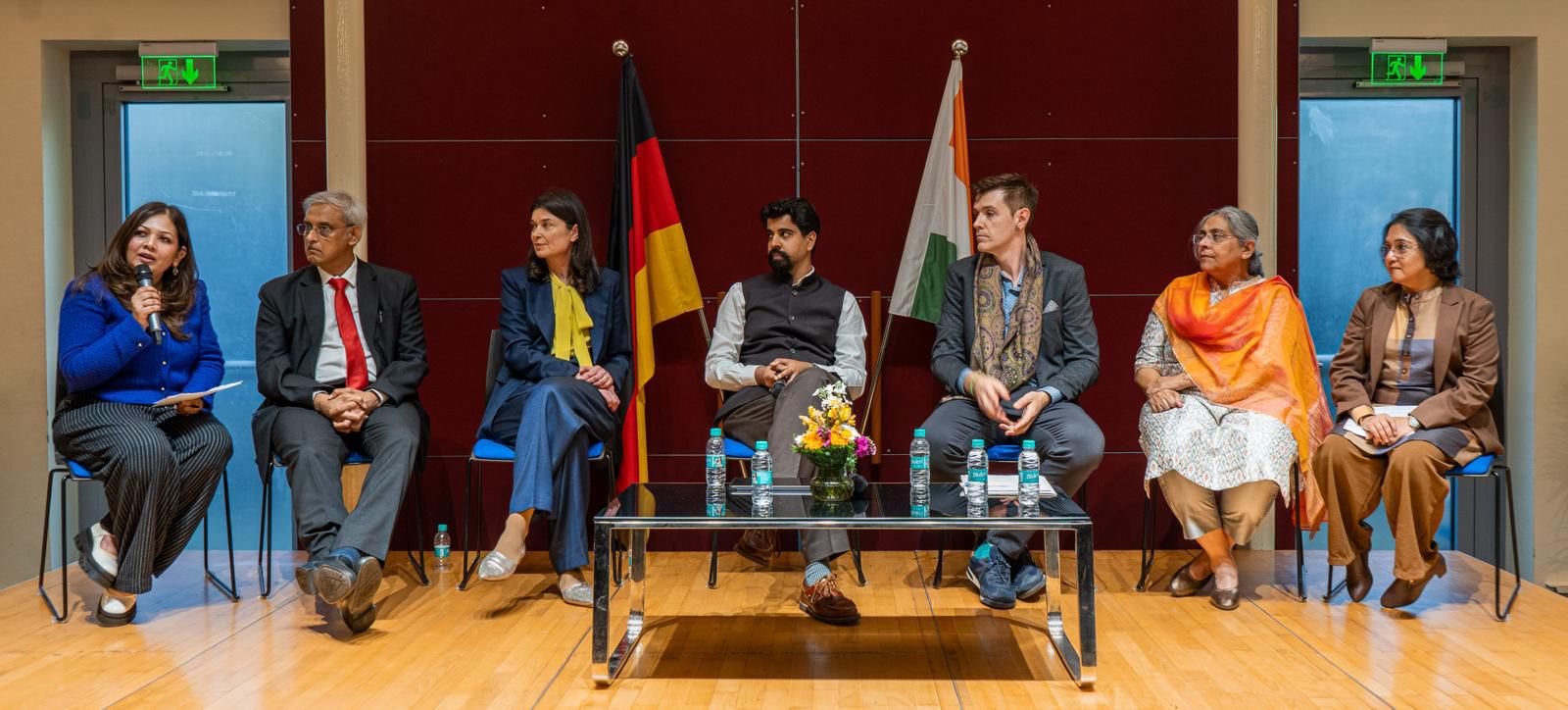
From LtoR: Jagori Dhar, Head of Media Relations, Siemens Stiftung, Dr. Anantharaman Subramaniyan – Head of Strategy & Sustainability, Siemens India, Dr. Nina Smidt – Managing Director & CEO, Siemens Stiftung, Kazim Rizvi – Founding Director, The Dialogue, Arthur Rapp. Director, DAAD, Dr Rukmini Banerji – CEO, Pratham Education Foundation, Dr. Kusumita Arora – Director, Indo-German Science & Technology Centre (IGSTC)
An Indo-German initiative focused on improving science and technology learning among school students from economically weaker backgrounds is gaining traction in India through the rollout of digital educational resources under the “STEM Education for Innovation: Experimento India” programme.
The initiative offers free digital Open Learning Resources (OERs) designed to strengthen Science, Technology, Engineering and Mathematics (STEM) learning in line with India’s National Curriculum Framework. The programme has been integrated into Siemens Limited’s Project Jigyaasa, a curiosity-based learning initiative aimed at improving STEM outcomes in schools.
The initiative was highlighted at a high-level panel discussion hosted by the German Embassy in New Delhi on March 5, 2026, where Experimento India and Project Jigyaasa were recognised for their complementary role in preparing students—particularly those from disadvantaged backgrounds—for future learning and careers.
Experimento India expands reach of digital learning tools
The Experimento India programme was launched following a Memorandum of Understanding signed in 2024 between Siemens Stiftung, Siemens Limited, and the Pratham Education Foundation. The collaboration aims to deploy STEM learning resources across schools and community learning spaces.
Designed to meet the needs of students from low-income communities, the platform provides educational content in English, Hindi, and Marathi. Within 15 months of launch, the digital platform recorded more than 155,000 views, indicating growing engagement with the STEM learning materials.
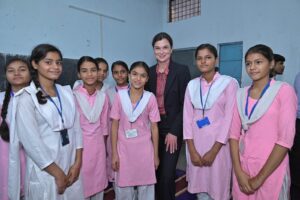
Dr. Nina Smidt, CEO and Spokesperson of the Board at Siemens Stiftung, said the initiative seeks to reduce educational inequalities through accessible technology-enabled learning resources.
“Innovation in education needs to expand access by bridging divides. Co-developed by Indian STEM experts and teachers, the project now offers over 250 OERs in students’ mother tongues. By leveraging technology to provide open and locally relevant STEM learning resources, Experimento India is ensuring that every child, regardless of background, has an early head start to navigate and excel in the face of digital, societal, and environmental transformations,” she said.
Focus on teacher training and community engagement
Beyond providing digital learning resources, the programme also focuses on building teacher capacity and community participation to strengthen long-term learning outcomes.
Teachers receive training to incorporate OER-based STEM materials into classroom instruction in regional languages. The initiative also involves parents and local communities, aiming to create broader support systems for children’s learning outside schools.
Dr. Anantharaman Subramaniyan, Head – Strategy, Sustainability and CSR at Siemens Limited, said developing scientific thinking at the school level is crucial for long-term skill development.
“Building a scientific temper in the formative high-school years lays the foundation for lifelong learning. Skill development that drives economic progress is most effective when it builds on this early grounding. Education and skilling are long-term priorities for Siemens Limited, and are guided by a lifecycle approach towards education, skilling and employability,” he said.
Indo-German cooperation highlights education and skills
The project was also presented as a model for strengthening STEM learning at the panel discussion titled “Nurturing Scientific Talent in India: Indo-German Cooperation in Education, Innovation and Skills.”
The event opened with remarks from German Ambassador to India Dr. Philipp Ackermann, and brought together representatives from government, industry, academia and civil society to discuss the role of education and technology in preparing students for future industries.
The discussions drew on the Indo-German Comprehensive Roadmap on Higher Education, adopted by German Chancellor Friedrich Merz and Indian Prime Minister Narendra Modi in January 2026, which identifies education, research and skills development as key pillars of the bilateral partnership.
Participants emphasised that technology-enabled education could play a critical role in democratising access to quality learning and preparing students for an increasingly AI-driven global economy.
Pratham’s role in adapting STEM learning for India
The programme also draws on Pratham Education Foundation’s more than three decades of experience in education interventions across India.
Pratham has worked to adapt and contextualise the STEM learning resources for Indian classrooms and integrate them into teacher training programmes.
Dr. Rukmini Banerji, CEO of Pratham Education Foundation, said accessible learning resources could significantly strengthen science education in schools.
“We believe that having high-quality and accessible resources for STEM can significantly strengthen teaching and learning practices and outcomes in Indian classrooms. Pratham has had a productive partnership for Experimento India to contextualize and adapt STEM content for Indian conditions. We look forward to working together to integrate these resources into teacher training and classroom instruction,” she said.