As India and Germany mark 25 years of their Strategic Partnership, the focus understandably gravitates towards trade volumes, technology cooperation, defence dialogues and climate commitments. These are important pillars. Yet beneath the architecture of policy and economics runs a quieter, more durable force shaping the relationship — people. It is here, in everyday interactions, migration journeys and cultural exchanges, which soft power truly resides.
Having lived in Germany for over four decades, I have witnessed how perceptions evolve not through declarations, but through lived encounters. When I arrived in Frankfurt in March 1981 as a young student, the Germany I encountered was very different from today’s multicultural republic. English was rarely spoken in public life. Foreigners were largely seen through the prism of “guest workers” — temporary, peripheral, and often unwelcome. As an Indian, I was frequently mistaken for someone who would eventually leave, not someone who would belong.
My first lessons about soft power came not from textbooks, but from human behaviour. A polite smile at an airport counter that faded once it became clear I was not a short-term tourist. Curious glances when I spoke German with an accent. Moments of unspoken distance, followed by moments of unexpected kindness — strangers who helped me find my way to Berlin, neighbours who later became friends, doctors who stood by my family during illness. These experiences taught me something essential: soft power is neither abstract nor automatic. It is built — or eroded — in small, human moments.
Soft power beyond stereotypes
Soft power is often reduced to symbols — yoga mats in parks, Bollywood films, Ayurveda centres. While these matter, India’s soft power in Germany today extends far beyond familiar cultural exports. What increasingly shapes perceptions is how Indians participate in German society.
Indian students, researchers, doctors, nurses and IT professionals are now visible across German cities and institutions. They are not seen as cheap labour, as earlier migrant groups often were, but as skilled contributors filling critical gaps in an ageing economy. Germans increasingly associate Indians with education, competence, adaptability and restraint — not loudly political, not aggressively religious, and largely focused on professional contribution rather than cultural assertion.
This shift matters. Soft power grows when a community is perceived not as a burden, but as a partner. Today’s Indian migrants are influencing German workplaces, universities and hospitals simply by being present, capable and reliable. They argue their case, but with reason. They assert themselves, but without confrontation. This quiet professionalism has become one of India’s strongest, if least advertised, sources of soft power in Germany.
Germany’s soft power — admired, but evolving
Germany, too, exercises soft power — though often without calling it that. Precision, trust, discipline, reliability and social responsibility have long defined how the world views Germany. These values continue to attract migrants, students and professionals from across the globe.
Yet Germany’s soft power is not static. An ageing society, chronic labour shortages and the visibility of everyday discrimination — now amplified by social media — are slowly reshaping perceptions. What once appeared as confidence can sometimes come across as arrogance; efficiency as rigidity. Migrants experience Germany differently depending on context: a workplace may feel inclusive, while a housing search or a casual street interaction may feel exclusionary.
This does not make Germany unique. Every society struggles with its contradictions. But soft power weakens when lived experience does not match declared values. The challenge for Germany is not to abandon its rules or structure, but to ensure that openness and fairness are felt consistently, not selectively.
Migration as the new connector
The scale of Indian migration to Germany today marks a historic shift. Over the past decade, the Indian community has more than tripled, driven by Germany’s Skilled Immigration Act and the urgent need for talent across sectors. Berlin alone feels transformed — Indian languages heard on public transport, Indian grocery stores and restaurants woven into neighbourhood life, students filling lecture halls and libraries.
Unlike earlier migration waves, this movement is shaped by choice, not desperation. Young Indians arrive aware of their global market value. They are mobile, informed and willing to move if opportunities or dignity are lacking. Loyalty, for them, is earned — not assumed. This is a fundamental change, and it forces German institutions and employers to adapt.
At the same time, many integration challenges persist. Housing shortages affect everyone, but migrants feel them more sharply. Credential recognition, while improving, still moves slowly. Subtle stereotypes — about flexibility, punctuality or hierarchy — continue to colour interactions in offices and classrooms. These are not insurmountable problems, but they require honesty and engagement on both sides.
Everyday soft power in action
The most revealing moments of India–Germany relations do not occur in summits, but in classrooms, hospitals and neighbourhoods. I recall failing an oral mathematics exam in my university days — not because I did not know the solution, but because the examiner’s attitude towards foreign students was unmistakably biased. A retest with another professor, using the same material, resulted in high marks. No policy document could have captured that truth as clearly as that moment did.
Conversely, some of the strongest expressions of German soft power came during personal crises — doctors who remained accessible at all hours, neighbours who cared for my family during illness, ordinary vendors who marked personal milestones with unexpected warmth. These gestures did more to build trust than any official integration programme.
Such experiences underline a simple truth: soft power is reciprocal. It grows when people feel seen, treated fairly and respected — regardless of nationality.
Technology, talent and the human layer
As artificial intelligence increasingly mediates hiring, admissions and assessment, there is a risk that human nuance is sidelined. Both India and Germany recognise this challenge. Their innovation and technology cooperation frameworks emphasise ethical design, inclusion and societal benefit — an acknowledgment that efficiency must not override empathy.
For migration-driven partnerships to succeed, technology must enhance human connection, not replace it. Talent flows thrive when individuals feel valued not just for their skills, but for their perspectives and dignity.
The road ahead: people first
Looking ahead, I am convinced that people-to-people ties will become the central pillar of the Indo-German partnership. Germany faces over a million unfilled jobs annually. India has exactly what Germany needs: a young, educated, globally mobile workforce. But this relationship cannot be transactional alone. Talent must be welcomed, retained and respected.
The German concept of Völkerverständigung — understanding among peoples — captures what lies ahead. The more Indians and Germans understand each other’s social norms, communication styles and everyday sensitivities, the stronger the partnership will become.
What gives me optimism is the visible shift already underway: greater openness in workplaces, more English in public life, increasing cultural confidence among migrants, and a recognition in Germany that diversity is no longer optional. What concerns me is complacency — the assumption that economic need alone will guarantee integration.
Soft power is fragile. It requires constant reinforcement through fairness, curiosity and humility.
A living partnership
Ultimately, the future of India–Germany relations will not be written only in ministries or memoranda. It will be written in shared offices, student dormitories, hospital wards and neighbourhood markets. It will be shaped by how people greet each other, argue with each other, support each other — and learn to live together.
That is where soft power truly lives. And that is where the Indo-German partnership will either deepen or falter.
This opinion piece is part of the ongoing series “Voices of India in Germany”, which brings together perspectives from individuals and organisations across diverse backgrounds to reflect on lived experiences alongside contemporary social, economic and policy questions, offering considered viewpoints on the evolving human and strategic dimensions of the India–Germany partnership.
About the Author
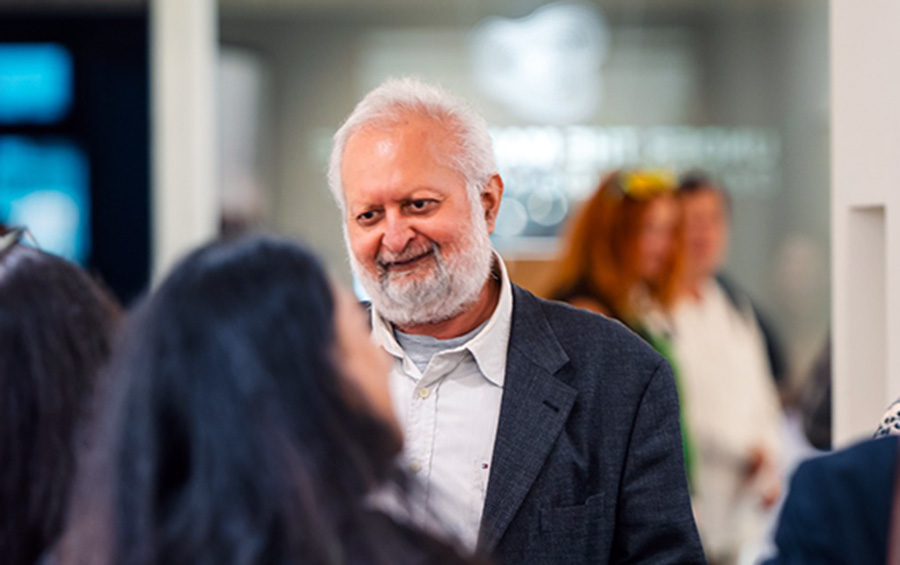
Dr. Sunil Thakar has lived in Germany for over four decades, having moved there in the early 1980s as a student. Over the years, he has worked across academia, German industry, and policy-oriented platforms, closely engaging with India–Germany cooperation in education, innovation and culture. Based in Berlin, he has witnessed first-hand the evolution of Indian migration to Germany and the shifting perceptions on both sides. A long-time advocate of people-to-people ties, his work focuses on the human dimensions of diplomacy, migration and soft power.