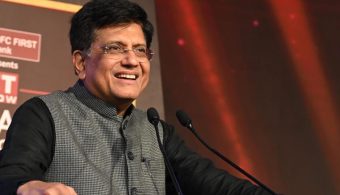

Photo Credit: Office of the Principal Scientific Adviser to the Government of India
At the India AI Summit 2026, held from 16–20 February 2026 at Bharat Mandapam in New Delhi, the Fraunhofer Society significantly deepened the technological partnership between India and Germany, spotlighting applied artificial intelligence for economic development and social good. The summit, convened under the IndiaAI Mission and attended by global policymakers, industry leaders and technology experts, provided a platform for advancing practical AI solutions across sectors such as manufacturing, agriculture, healthcare and governance.
Fraunhofer’s participation was anchored in the Indo-German Innovation and Technology Forum “AI for Economic Development and Social Good,” which brought together senior captains of industry, government officials and research leaders to explore how AI can be deployed responsibly for societal benefit.
Human-Centric AI at the Core of Partnership
Speaking at the forum on 21 February 2026, Prof. Dr. Kristina Sinemus, Hessian Minister for Digitalisation and Innovation, emphasised that AI is already transforming how societies produce, heal, feed populations and administer public services. She underlined that the central issue is not whether AI will shape our future, but whether economic development and social good can progress hand-in-hand.
“Our strategy is guided by a clear principle: technology must serve people, not the other way around,” Dr. Sinemus said, highlighting India’s accomplishments through digital public infrastructure initiatives such as ADA, the National Programme on AI (NPI) and India Stack. She noted that Germany’s strengths in balanced regulation, data protection and quality assurance can complement India’s scale and innovation capacity, enabling a partnership grounded in shared democratic values.
Industry and Institutional Leadership
Fraunhofer assembled a distinguished group of Indian and German industry leaders to discuss applied AI deployment. Executives from Bosch, SAP, Auvomio and the Mercedes-Benz Research and Development Centre India participated in sessions focused on the integration of AI in manufacturing and mobility systems, emphasizing responsible innovation and real-world implementation.
Georg Enzweiler, Deputy Chief of Mission at the Embassy of the Federal Republic of Germany in New Delhi, highlighted the vast potential of AI for economic and social advancement, with particular emphasis on its applications in agriculture and manufacturing. He noted Germany’s investments in AI for climate and sustainability as well as India’s strong talent base, pointing to a natural synergy between the two nations’ innovation ecosystems.
Translational Research and Secure Digital Platforms
Dr. Thomas Kuhn, Head of Embedded Systems at the Fraunhofer Institute for Experimental Software and Engineering, demonstrated emerging technologies such as the “Virtual Employee” and a Dataspaces Platform designed for secure data exchange and collaborative projects. These initiatives reflect Fraunhofer’s focus on translational research — moving innovations from laboratory concepts into deployable tools that address industry challenges.
Anandi Iyer, Director of Fraunhofer Office India, highlighted the organisation’s nearly two decades of engagement in the country, underscoring its role in bridging the gap between academic research and industrial application. “India, as we all know, needs translational research; Fraunhofer has an important role to play,” she said, noting that the society was among the earliest international R&D organisations to establish a sustained presence in India.
Cross-Border Collaboration in High Technology and Security
Dr. Raj Kumar Upadhyay, CEO of the Centre for Development of Telematics (C-DOT), spoke about expanding cooperation in areas such as internet security, next-generation telecommunications and AI-enabled systems. He described the collaboration with Fraunhofer as highly valued, capable of accelerating technology advancement and deployment across Internet security, 5G/6G networks, quantum communications and AI-powered telecommunications infrastructure.
Empowering Women and Inclusive Innovation
A dedicated session on Women in Innovation and Technology, chaired by Dr. Sinemus and Dr. Parvinder Maini, Scientific Secretary in the Office of the Principal Scientific Adviser to the Government of India, brought together leaders from India and Germany to share their experiences and insights. Dr. Maini emphasised that leadership in science and technology requires “audacity, resilience and purpose,” calling for stronger mentorship ecosystems and deeper cross-border collaboration in areas such as AI and climate innovation.
AI for Agriculture: Interoperability and Farmer-Centric Tools
In a session focused on agriculture, Fraunhofer experts highlighted the need for robust governance frameworks, interoperable systems and high-quality agricultural data to build effective AI solutions that benefit farmers. Participants noted that fragmented digital platforms often fail to deliver meaningful impact for primary producers, and emphasised the importance of integrated, standardised tools capable of providing real-time, farmer-centric decision support to mitigate climate risks and enhance productivity outcomes.
Reinforcing a Strategic Indo-German AI Framework
Fraunhofer’s engagements during the India AI Summit 2026 marked a strategic reinforcement of the Indo-German innovation partnership, bringing together policymakers, research institutions and industry leaders to address the practical challenges of AI deployment. At a time when AI governance and economic competitiveness are global priorities, the partnership reflects a model built on mutual strengths: India’s scale and innovation ecosystem and Germany’s expertise in regulatory balance and quality assurance.