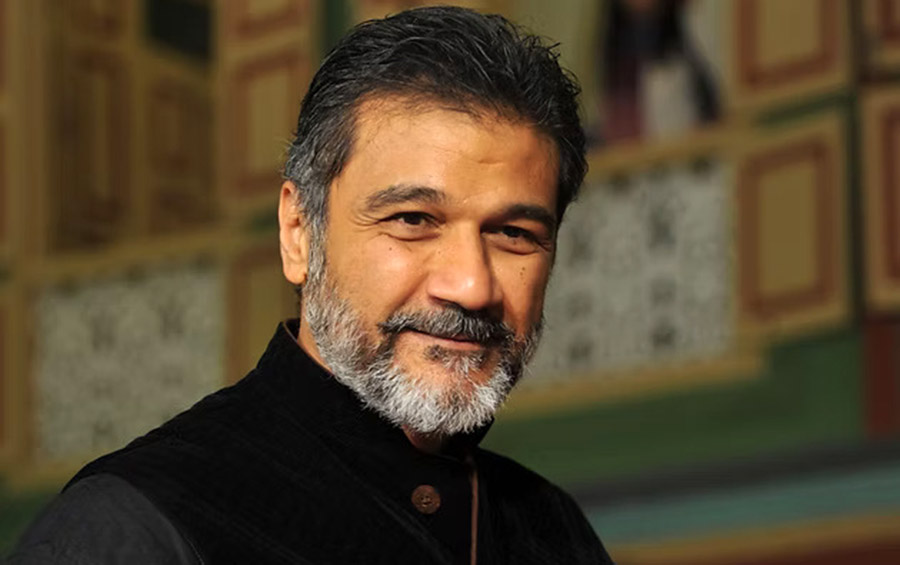
Ahmedabad-based businessman, heritage conservationist, and educationist Honorary Consul Abhay Mangaldas was recently appointed as the Honorary Consul of Germany in Ahmedabad, marking a significant step in strengthening Germany’s engagement with Gujarat. The announcement was made by the Consulate General of the Federal Republic of Germany in Mumbai, underscoring Germany’s growing focus on deepening diplomatic, economic, cultural, and educational ties with western India.
Founder and CEO of The House of MG and Managing Trustee of Shreyas Foundation, Mr. Mangaldas brings to the role a distinctive blend of heritage preservation, sustainable development, education, and cultural engagement. Over the past two decades, his work has focused on adaptive reuse of heritage, experiential learning, and creating meaningful intersections between tradition and modernity. He also serves as Advisor for Ahmedabad to INTACH.
In conversation with TheDialog, Pooja Chaturvedi Sah speaks with Honorary Consul Abhay Mangaldas about his vision for India–Germany relations at the regional level, why people-to-people connections matter more than transactional partnerships, and how Gujarat can emerge as a global hub for education, sustainability, culture, and innovation.
Let me begin by congratulating you on your appointment as Honorary Consul of Germany in Ahmedabad. At a time when India–Germany relations are deepening across sectors, what will be your immediate priorities in strengthening this partnership at the Gujarat level?
I think the first priority is to invest in the human layer of the relationship.
We often begin with trade and policy, but in my experience, durable partnerships are built when people understand each other — how they think, how they work, and what they value.
So my focus is to create a platform through Shreyas Foundation where that understanding can develop organically. The rest tends to follow.
Gujarat is increasingly seen as a hub for industry, innovation, and global investment. How do you plan to position the state as a key partner for German businesses and institutions?
Gujarat is often presented as efficient and business-friendly, which it is, but that’s only one dimension.
There is also a deep cultural intelligence here, and a long history of trade, craft, and community.
If we position Gujarat as a place where enterprise and culture coexist in a symbiotic relationship, it becomes a much richer proposition for German partners who are themselves rooted in both industry and tradition.
In your view, what distinguishes Gujarat as a strategic partner for Germany within India’s broader economic and geopolitical landscape?
What stands out to me is continuity.
There is a certain steadiness in how Gujarat engages with industry and enterprise because of its political stability. In this way, it is a unique state in India, as that predictability builds confidence.
At the same time, there has been an environment that is pro-business and enterprise since post-independence. This combination is quite powerful.
You have highlighted education and skill development as core focus areas. How do you envision expanding Indo-German collaboration in vocational training, language learning, and youth mobility?
At Shreyas Foundation, our approach is deeply influenced by Maria Montessori and Rabindranath Tagore — the idea that education must be experiential, self-directed, and rooted in culture and nature.
So language is not taught as a subject, but absorbed through lived experience, through theatre, sport, music, and daily life on campus. The environment itself becomes the teacher.
With its open green spaces, emphasis on the arts, and engagement with heritage, the campus allows students to grow into well-rounded individuals — grounded, confident, and adaptable.
Working with Goethe-Institut and Indo-German Chamber of Commerce, we are building pathways that connect language, vocational training, and employment.
But equally, we are looking beyond a bilateral model. The intention is to collaborate with cultural institutions from multiple countries, so that Shreyas evolves into a genuinely international hub for languages and culture. This is part of our broader vision to make Shreyas a Liberal Arts Day-School for students.
A student on campus should be able to engage with German, Japanese, Korean, or any other culture, not as a subject, but as a lived experience. That kind of environment naturally creates individuals who are globally comfortable, yet locally grounded.
And importantly, this ecosystem must remain inclusive. With the presence of German companies in and around Ahmedabad, there is a real opportunity for CSR-led participation, bringing in youth from economically challenged backgrounds into pathways such as nursing, hospitality, and shopfloor skills.
Not everyone needs to enter high-technology sectors; there is dignity and deep value in these professions, and strong demand globally.
Gujarat is widely recognized for its strong entrepreneurial culture and business acumen. What, in your view, can Germany learn from this spirit, particularly in the context of innovation, risk-taking, and local enterprise ecosystems — and vice versa?
We tend to move forward and resolve along the way; Germany tends to resolve before moving forward.
Both approaches have value. The opportunity is to learn from each other without losing what comes naturally to us.
With Germany placing strong emphasis on sustainability and green technologies, what opportunities do you see for collaboration with Gujarat in areas such as renewable energy, sustainable urban development and design, smart cities, and climate innovation?
Sustainability, for me, is not a separate agenda; it is a way of thinking about everything we do, whether it’s at The House of MG, Shreyas Foundation, or Darwin Livelight.
Gujarat is already a leading solar energy hub in India. We do have challenges with water, as well as waste management in industry and cities as a whole, and with German technology, we can find solutions.
Germany’s strength in engineering and standards, combined with India’s scale and urgency, offers a meaningful opportunity to co-create solutions that are both practical and responsible.
Germany brings rigour and engineering depth; India brings urgency and scale.
If we can collaborate on modular systems, sustainable materials, and climate-responsive design, we can create solutions that are not just efficient, but also responsible.
In an increasingly complex global environment, India and Germany are often described as reliable partners, supported by a wide ecosystem of institutions, businesses, and cultural platforms. From your vantage point, how can regional-level engagement contribute to strengthening this trust at the national level?
National relationships are often articulated at a high level, but they are experienced locally. When a student spends time in Ahmedabad, or a trainee works within a German company here, that experience shapes their perception far more than any formal agreement.
So regional engagement becomes the foundation on which larger trust is built.
I see Gujarat becoming a key investment destination for Germany, like it is for Japan. We hope to become catalysts in understanding each other’s culture, strengthen this association, and bring our two countries closer.
Beyond trade and business, cultural diplomacy plays a crucial role in bilateral relations. How do you plan to foster deeper people-to-people ties between Germany and Gujarat, and what kinds of cultural exchanges or collaborations would you like to see strengthened at the regional level?
Culture, in our context, is not something we present — it is something we live.
At Shreyas Foundation, drawing from the ideas of Mahatma Gandhi, as well as Montessori and Tagore, education is seen as an integration of values, environment, and experience.
By bringing multiple international cultural partners into this environment, the campus itself becomes a living exchange, where diversity is not curated, but encountered in everyday life.
Our campus already houses major theatre spaces, library and sports facilities, as well as agricultural spaces. With German presence on campus, we hope to see micro-level changes that can easily translate to macro initiatives. We hope to become a laboratory for collaborative opportunities.
That kind of immersion builds not just understanding, but respect — and that is the foundation of any meaningful relationship.
You bring a unique professional background spanning heritage hospitality, sustainable construction, and education. How do these experiences — and your emphasis on balancing growth with cultural identity — shape your approach to this role and to broader India–Germany collaboration?
My work has moved across heritage, education, and sustainable construction, but the underlying concern has been consistent — how to balance continuity with change, and how to remain relevant while still putting innovation at the forefront.
In every sense, whatever we do should be a model for others to follow.
Growth that is disconnected from cultural context tends to be fragile, while tradition that resists change becomes static.
So I approach this role with a focus on creating collaborations that are both progressive and rooted. However, at no point will our sense of pride in our own identity be compromised.
Looking ahead, what would success in your role as Honorary Consul look like over the next few years, both in terms of tangible outcomes and the broader impact on India–Germany relations?
Success, for me, would be when this stops feeling like an initiative and starts feeling like a natural ecosystem.
If a young person from Ahmedabad, or from a small town in Bihar, can enter a space like Shreyas Foundation, learn through experience, engage with multiple cultures, acquire language and skills, and find dignified work through an international network of partnerships, then something meaningful has been created.
And if this model can travel quietly into other parts of the country, adapting to local contexts, then it has truly taken root.