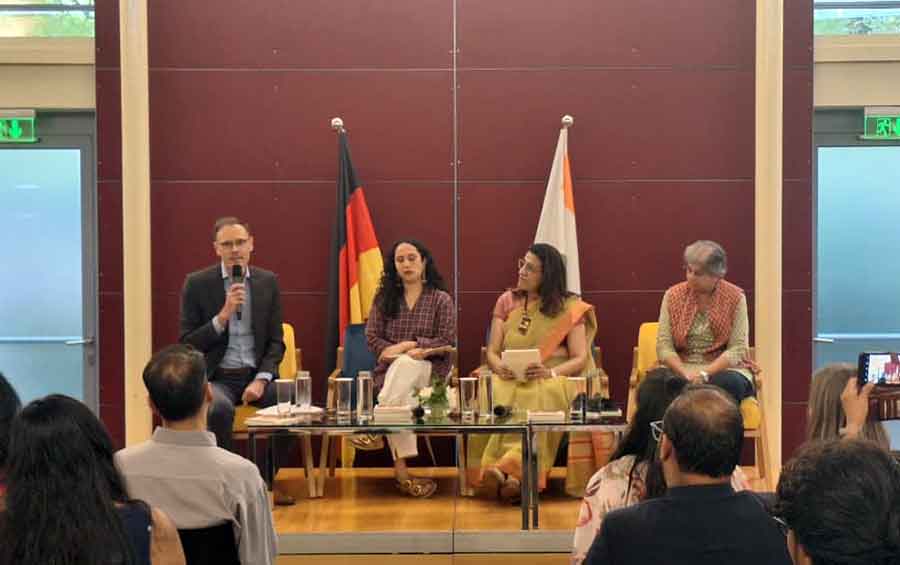
Women must be recognised not only as beneficiaries of clean energy policies but as innovators, entrepreneurs, researchers, community leaders and decision-makers driving India’s energy transformation, speakers emphasised during the latest edition of the India-Germany Climate Talks held in New Delhi on July 9.
Hosted by the German Embassy in New Delhi, the event focused on the role of women in shaping India’s clean energy transition and marked the launch of a new publication, Powering the Future: Women at the Heart of India’s Energy Transition, authored by Neha Saigal, Co-founder of Intertidal Lab and Climate & Care Initiative, Bengaluru, and published by Heinrich Böll Stiftung (HBS), New Delhi.
The book highlights stories of women advancing sustainable energy solutions across different parts of India and argues for integrating gender considerations into climate and energy policymaking. Drawing on experiences from Odisha, Punjab, Jharkhand, Maharashtra and Tamil Nadu, it examines how women are influencing India’s evolving energy landscape through leadership, innovation and community engagement.
Germany Highlights Importance of Inclusive Climate Action
Opening the event, Dr. Philipp Ackermann, Ambassador of the Federal Republic of Germany to India and Bhutan, underlined the importance of ensuring that the energy transition delivers opportunities for women while contributing to broader economic development.
“A gender-responsive energy transition is not just good for gender equality – it is an economic opportunity. India’s journey toward renewable energy can unlock more markets, create more jobs, and drive innovation if women have equal access to resources, decision-making, and leadership. Germany is proud to partner with India in making this a reality. By bringing forward the experiences of women at the grassroots, this conversation reminds us that the transition is as much about people and communities as it is about technology. Through the Indo-German Partnership for Green and Sustainable Development, India and Germany are not only advancing clean energy but also building a future that is people-centred, inclusive, and leaves no one behind,” Dr. Ackermann said.
His remarks reflected the growing emphasis within the India-Germany climate partnership on linking sustainability goals with social inclusion and equitable development.
Book Documents Women’s Leadership Across India’s Energy Landscape
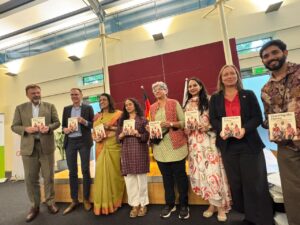 The newly launched publication explores how women are contributing to multiple dimensions of India’s energy transition, from renewable energy deployment and community mobilisation to entrepreneurship and local governance.
Speaking about the book, author Neha Saigal argued that gender considerations must be embedded at the core of energy policy rather than treated as a secondary concern.
“India’s energy transition presents an opportunity to place gender at the heart of policy and decision-making, not as an afterthought but as a foundation for a just transition. Women are central to energy systems as users, providers of care, and drivers of livelihoods, and their leadership and lived experiences must shape the transition. We need to move beyond speaking of a single ‘energy transition’ and recognise that India is experiencing multiple energy transitions, each shaped by local realities and the lived experiences of its communities. A just transition is not only about moving away from fossil fuels, but about ensuring we do not recreate existing inequalities as we build a cleaner energy future,” she said.
According to the publication, women’s experiences often reveal the social and economic dimensions of energy access that can be overlooked in technology-focused discussions, making their participation essential to designing effective climate and energy solutions.
Experts Discuss Barriers and Opportunities for Women in the Energy Sector
The book launch was followed by a panel discussion moderated by Jochen Luckscheiter, Director, Heinrich Böll Stiftung, New Delhi.
The discussion featured:
- Dr. Priyadarshini Karve, Founder of Samuchit Enviro Tech and Chief Executive Officer, Clean Energy Access Network, Pune
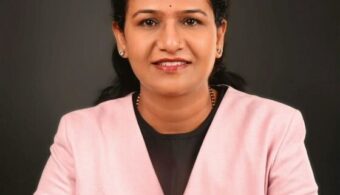
- Dr. Amrita Rana, Radiologist, Director, Rana Diagnostics and Founding Member, Clean Air Punjab
- Neha Saigal, Co-founder, Intertidal Lab and Climate & Care Initiative
The panellists examined the opportunities and challenges women continue to face across the energy ecosystem, including in research, innovation, entrepreneurship, community leadership and policymaking.
Drawing on her experience working at the intersection of science, entrepreneurship and decentralised renewable energy, Dr. Karve highlighted the need to expand access to clean energy solutions while creating pathways for women to lead innovation and enterprise.
Dr. Rana, meanwhile, discussed the connections between public health, climate action and clean mobility, arguing that stronger community engagement and women’s leadership can play an important role in accelerating cleaner transportation solutions and improving air quality in Indian cities.
A Just Energy Transition Must Be People-Centred
Throughout the discussion, speakers stressed that a successful energy transition cannot be measured solely through technological progress or renewable energy capacity additions.
Instead, they argued that long-term success will depend on ensuring equitable access to finance, technology, leadership opportunities and decision-making processes.
Moderating the session, Jochen Luckscheiter observed that tackling climate change requires not only technological innovation but also greater inclusion and representation within the energy sector.
Panellists agreed that India’s transition towards cleaner energy presents a unique opportunity to simultaneously advance climate action, economic development and gender equality. They called for gender-responsive approaches to be integrated into energy planning, stronger participation of women across the clean energy value chain and greater support for local leadership.
India-Germany Cooperation Expands Focus on Inclusive Climate Action
The discussion also highlighted the broader context of Indo-German cooperation on climate and sustainable development.
Germany has long supported India’s energy transition through technical cooperation, climate finance initiatives and policy partnerships. In recent years, the partnership has increasingly focused on ensuring that climate action is inclusive and responsive to the needs of women and local communities.
The event forms part of the wider Indo-German Partnership for Green and Sustainable Development (GSDP), which seeks to advance cooperation in areas such as renewable energy, climate resilience, sustainable infrastructure and green growth while promoting social inclusion.
The programme concluded with an interactive audience discussion, where participants reflected on the role that young women, researchers, entrepreneurs and civic leaders can play in shaping India’s low-carbon future and ensuring that the benefits of the energy transition are shared more equitably across society.