
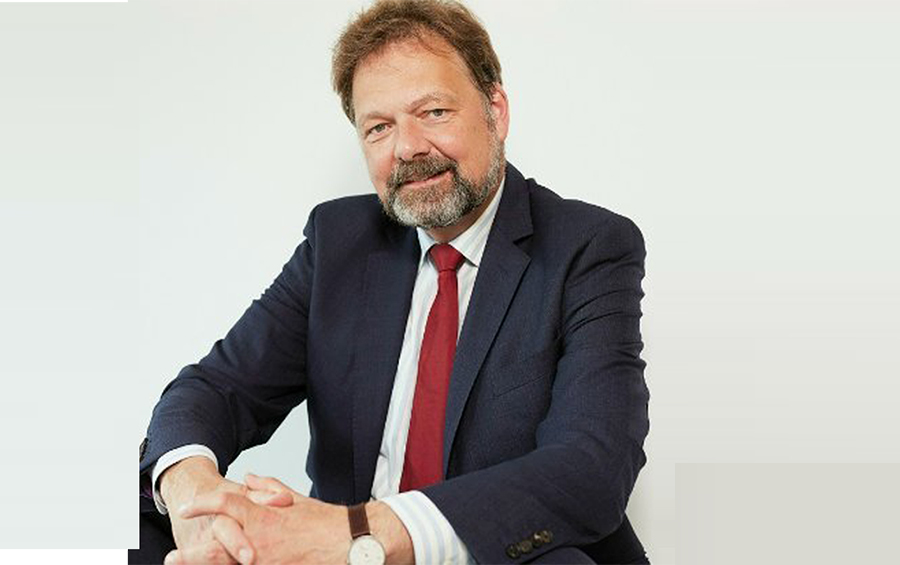
India and Germany are moving closer to finalising a proposed ₹90,000-crore submarine agreement, with German Ambassador to India and Bhutan Dr Philipp Ackermann indicating that the deal could be signed as early as August 2026.
Speaking at the Indo-German Industries Dialogue in New Delhi on July 30, 2026, Ambassador Ackermann presented the submarine programme as part of a broader phase of bilateral cooperation covering defence manufacturing, trade, investment, renewable energy, artificial intelligence and industrial technology.
The outgoing Ambassador also highlighted Prime Minister Narendra Modi’s sustained engagement with Germany and identified the proposed India–European Union Free Trade Agreement as a potentially transformative development for German businesses in India.
Submarine agreement could be signed within weeks
Speaking to reporters on the sidelines of the event, organised by the Indo-German Chamber of Commerce, Ambassador Ackermann expressed confidence that the long-pending Project-75(I) agreement would be concluded shortly. Paraphrasing his remarks, he said the signing could take place within the following month.
The proposed agreement, estimated at more than €8 billion or over ₹90,000 crore, involves the construction of six next-generation conventional submarines in India for the Indian Navy.
Germany’s ThyssenKrupp Marine Systems, or TKMS, is expected to provide its Type 214 design and technological assistance, while state-owned Mazagon Dock Shipbuilders Limited, or MDL, will construct the vessels at its Mumbai facility.
The submarines will be equipped with Air Independent Propulsion technology, allowing them to remain underwater for longer periods without surfacing. This is expected to improve the Indian Navy’s underwater endurance, stealth and operational capabilities.
Technology transfer and domestic manufacturing form a central part of the programme. MDL has indicated that indigenous content could exceed 60%, creating opportunities for Indian suppliers and strengthening domestic expertise in submarine construction and maintenance.
The final programme cost has not yet been officially announced. While the core acquisition has previously been estimated at about ₹66,000 crore to ₹70,000 crore, higher figures approaching ₹90,000 crore or ₹99,000 crore may include weapons, combat systems, training, infrastructure and long-term support.
Deal to deepen defence-industrial cooperation
Project-75(I) is among the Indian Navy’s most important modernisation programmes and is intended to strengthen its conventional submarine fleet.
The agreement would also provide MDL with a substantial order pipeline extending into the next decade. Beyond construction, the vessels will require maintenance, upgrades, spare parts and technical support throughout their operational lives.
For India and Germany, the proposed contract represents a shift from the purchase of defence equipment towards joint production, technology transfer and long-term industrial cooperation.
During German Chancellor Friedrich Merz’s visit to India on January 12 and 13, 2026, the two governments agreed to expand cooperation between their defence industries, with an emphasis on joint development and production. The submarine programme would become the most significant project under that approach if finalised.
Ambassador Ackermann praises PM Modi’s engagement
Ambassador Ackermann also credited Prime Minister Modi with playing an active role in strengthening bilateral ties.
Paraphrasing the Ambassador’s remarks, he described the Prime Minister as highly engaged and supportive of closer cooperation with Germany. He also characterised Prime Minister Modi as a strong friend of the country.
The comments came as New Delhi and Berlin seek to expand their strategic partnership beyond diplomatic engagement to include defence manufacturing, clean energy, digital technology and advanced industrial collaboration.
India–EU FTA could boost trade and investment
Ambassador Ackermann identified the proposed India–EU FTA as one of the most important factors shaping the future of German business engagement in India.
In paraphrased remarks, he described the agreement as a possible turning point for German companies. He expressed hope that it could be signed by the end of 2026 and implemented during the first half of 2027.
Germany is India’s largest trading partner in Europe, with Ambassador Ackermann placing annual bilateral trade at more than $50 billion. He said the FTA could encourage greater German investment and business participation in India.
The agreement could reduce tariff and regulatory barriers, improve market access and create a more predictable commercial environment. It may also expand opportunities in advanced manufacturing, machinery, automotive systems, renewable energy, electronics and research-intensive industries.
Germany could import green hydrogen from India
Clean energy was another major theme of the July 30 dialogue. Ambassador Ackermann said India’s expanding renewable-energy capacity could enable it to become an energy exporter within the next few years, with Germany potentially emerging as a buyer of Indian green hydrogen.
He identified renewable energy as one of the strongest pillars of the bilateral partnership and said the two governments were progressing towards more concrete cooperation on hydrogen.
Referring to his visit to the Adani Group’s renewable-energy development in Kutch, Gujarat, Ambassador Ackermann highlighted the scale of its solar and wind generation and its green-hydrogen plans.
He also cited the cooperation between ThyssenKrupp and Bharat Heavy Electricals Limited for the localisation of alkaline water-electrolyser technology. In paraphrased comments, he said combining electrolysis expertise with Indian engineering and manufacturing capabilities would support the execution of green-hydrogen projects.
AI and industrial technology emerge as new priorities
Ambassador Ackermann also identified artificial intelligence, semiconductors, digital manufacturing and Industry 5.0 as emerging areas of India–Germany cooperation.
He said the transformation of industrial production could create new value chains and employment. The bilateral approach aims to combine India’s strengths in software and AI with Germany’s industrial and engineering capabilities.
Cooperation in these areas could also improve market access for startups and smaller businesses, diversify supply chains and support the responsible development of artificial intelligence.
The possible signing of the submarine agreement, progress on the India–EU FTA and expanding cooperation in green hydrogen and digital technologies collectively point to a more substantive India–Germany partnership centred on joint production, investment and technological collaboration.