Photo Credit: x.com/DrSJaishankar
External Affairs Minister Dr S. Jaishankar and Union Finance Minister Nirmala Sitharaman highlighted opportunities to deepen India’s economic engagement with Europe at the Munich Leaders Meeting in New Delhi, with discussions covering trade, advanced manufacturing, semiconductors, artificial intelligence and resilient supply chains.
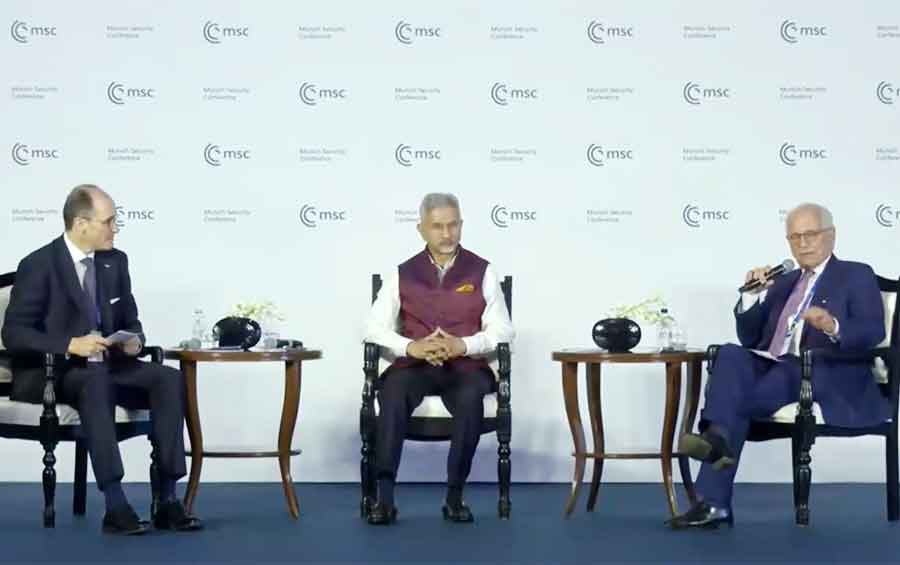
The meeting, organised by the Munich Security Conference on October 4–5, brought together senior decision-makers and experts. The Finance Minister participated in a discussion on October 5, while the External Affairs Minister addressed the opening session on October 4 and joined a conversation with Wolfgang Ischinger, President of the Munich Security Conference, and Bernard Kotsch, State Secretary at Germany’s Federal Foreign Office.
Finance Minister highlights balanced approach to trade
Speaking at the meeting, the Finance Minister presented the India–EU trade agreement as an example of expanding market access while protecting sensitive domestic sectors. Her remarks highlighted the balance between creating opportunities for exporters and accommodating the needs of domestic industries.
Negotiations for the agreement concluded in January 2026. In September, the European Commission submitted proposals to the Council of the European Union for its signature and conclusion. The agreement still requires the relevant approval and ratification procedures before it can enter into force.
The framework is designed to reduce trade barriers, simplify customs procedures and create new export opportunities. It also includes provisions concerning services, intellectual property and support for smaller businesses seeking to participate in bilateral trade. Once implemented, these measures are intended to make commercial exchanges easier and more predictable.
Technology cooperation in discussion with German representatives
During his conversation with President Ischinger and State Secretary Kotsch, the External Affairs Minister said India was intensifying its engagement with the European Union. He identified advanced manufacturing, semiconductors, artificial intelligence and space capabilities as areas where cooperation could expand.
The Minister also pointed to India’s prospects for sustained growth and its demographic strengths as factors supporting a deeper economic relationship with Europe. His remarks placed industrial capabilities and innovation alongside trade as important elements of the partnership.
Resilient supply chains remain a priority
In his opening remarks, the External Affairs Minister highlighted supply-chain resilience and diversification as important areas for cooperation.
For the India–Europe economic relationship, these priorities offer scope to develop stronger production networks and partnerships between industries with complementary capabilities. Cooperation in advanced manufacturing and semiconductors could support both commercial growth and greater continuity of supply. The sectors identified represent opportunities for further engagement rather than newly announced projects at the meeting.
Building on India–Germany’s existing economic links
The presence of State Secretary Kotsch in the External Affairs Minister’s discussion gave the wider India–Europe conversation a direct German connection. The technology sectors highlighted also overlap with established priorities in India–Germany cooperation.
At the German National Day reception in November 2024, the External Affairs Minister had identified artificial intelligence, semiconductors, quantum computing and clean technologies as areas for deeper bilateral engagement. The Minister had also emphasised educational and technological links, reliable supply chains, and greater mobility of talent and skills.
The New Delhi meeting brought trade and technology cooperation into a shared economic discussion. For India and Germany, it reinforced the relevance of existing industrial, research and skills partnerships as the broader India–EU trade agreement progresses through its remaining approval stages.