Photos’ Credit: Fraunhofer Office India
India–Germany technology discussions in Bengaluru and New Delhi from 17 to 19 November 2026 focused on how the two countries could work together across industrial supply chains.
At the Bengaluru Tech Summit, speakers examined how manufacturers can share data to deploy AI, how deep-tech startups can bring research to market, and where Indian and German semiconductor capabilities could complement each other. A separate workshop in New Delhi identified priorities for diversifying rare-earth magnet supply, from refining and recycling to manufacturing.
Automotive data sharing and industrial AI
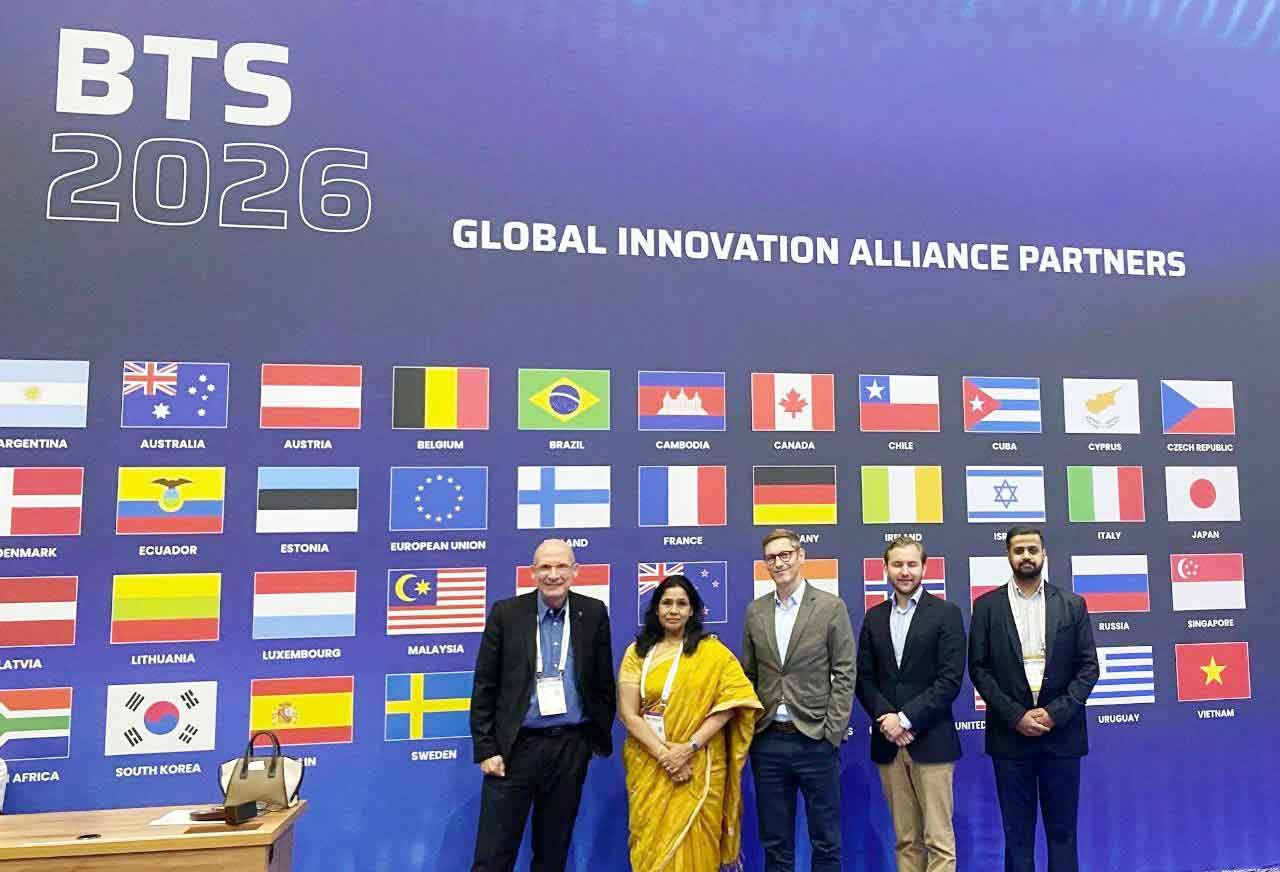
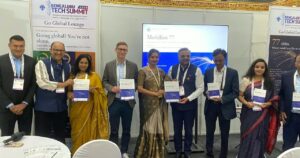 At the 29th Bengaluru Tech Summit, held from 17 to 19 November at the Bangalore International Exhibition Centre, a session on industrial AI examined how companies can share data securely and use it to deploy AI at scale. In his keynote, Prof. Dr. Boris Otto, Director at Germany’s Fraunhofer Institute for Software and Systems Engineering (ISST), pointed to India’s digital public infrastructure, open-source ecosystem and use of data in healthcare as areas where the two countries could learn from each other.
One example was Catena-X, which gives companies across the automotive supply chain a common way to exchange data while retaining control over who can access it. Prof. Otto discussed how the initiative could apply in India during a visit to Fraunhofer Office India. The visit also included industry engagements, among them a meeting with Infosys co-founder Kris Gopalakrishnan that Prof. Otto and Aditya Fuke attended, according to Fraunhofer Office India.
Deep-tech startups, semiconductors and connected devices
A panel on 18 November examined what deep-tech startups need to turn research into products and grow beyond their first customers. Anandi Iyer, Director of Fraunhofer Office India, joined the discussion, which covered mentorship, partnerships with research institutions and access to overseas markets. Panellists also examined how industry, government, research institutions and startups can work together to support that growth.
At embedded world India, held alongside the summit, a roundtable with Deutsche Gesellschaft für Internationale Zusammenarbeit (GIZ) examined where Indian and German capabilities could complement each other across the semiconductor supply chain.
The event also featured a demonstration of mioty, a low-power wireless standard for connected devices, by Shirley Gladia, Jubin Molai and René Dünkler. Mr. Molai gave a technical presentation on the standard’s use in embedded Internet of Things applications.
Rare-earth magnet refining, recycling and manufacturing
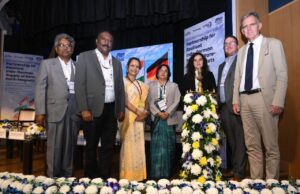 In New Delhi, more than 100 representatives from government, industry and research met on 18 and 19 November at the Dr. Ambedkar International Centre to discuss rare-earth magnet supply chains. The workshop followed the India–Germany Joint Declaration of Intent on critical minerals cooperation signed in January 2026.
Fraunhofer IWKS and the German Mineral Resources Agency (DERA) organised the workshop in collaboration with the Centre for Materials for Electronics Technology (C-MET), Hyderabad. The Indo-German Science & Technology Centre (IGSTC) funded it, and Fraunhofer Office India coordinated it.
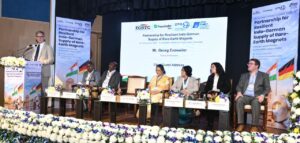 Participants discussed how India’s rare-earth resources and manufacturing capacity could be combied with Germany’s expertise in alloys, precision engineering and recycling. They identified three ways to reduce reliance on a single source of supply: expanding refining, converting rare-earth materials into metals and recovering material from used products. The discussions covered recycling methods such as recovering material directly from discarded magnets. These processes support the production of high-performance magnets used in electric vehicles, wind turbines and advanced electronics.
The workshop featured Sunita Verma of the Ministry of Electronics and Information Technology as guest of honour, Georg Enzweiler of the German Embassy in New Delhi as chief guest, and Dr. Kusumita Arora of IGSTC, who delivered a special inaugural address. Technical contributors included the Geological Survey of India, IIT (ISM) Dhanbad, IREL, EIT RawMaterials and German magnet manufacturer VACUUMSCHMELZE.
The workshop identified joint research funding, recycling pilots that could be scaled up, technology partnerships, joint ventures and potential purchase agreements for future production as areas for follow-up. Participants also discussed aligning approaches to sustainability, material traceability and trade in critical minerals.
Across both meetings, a common question for India and Germany was how research institutions and businesses could work together on problems that span entire supply chains. In Bengaluru, that meant examining how manufacturers and suppliers could exchange data. In New Delhi, it meant looking at how material recovered from discarded magnets could feed back into production.