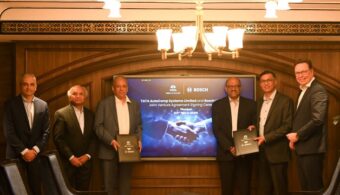
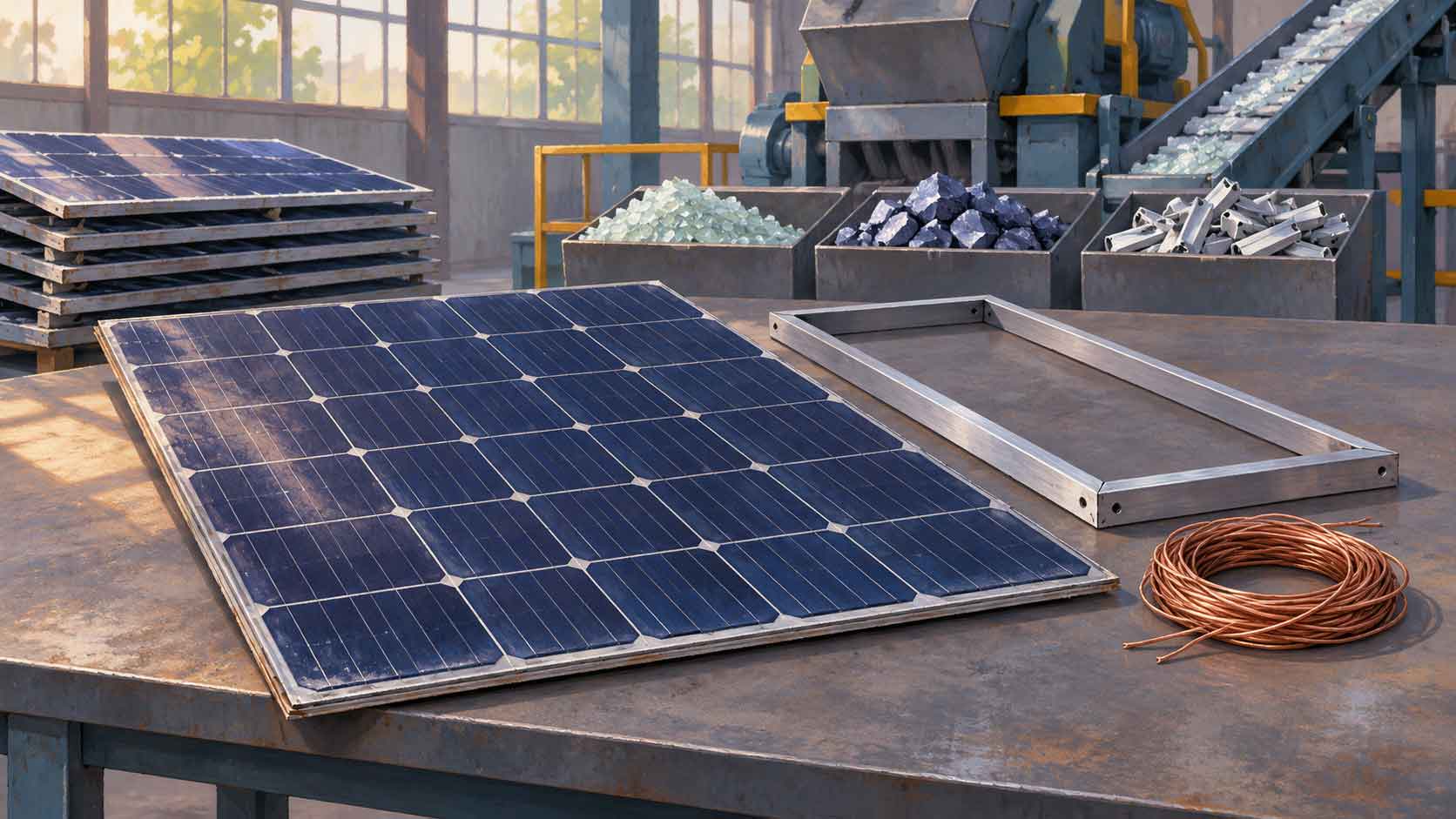
German Ambassador to India Dr Jasper Wieck highlighted the recovery of materials from old solar panels in remarks to The Hindu in Coimbatore on 13 November. Ambassador Wieck said Germany’s Ministry of Economic Affairs already has critical minerals partnerships with several countries. His remarks follow a January declaration of intent that identified recycling and processing alongside mineral exploration as possible areas of cooperation.
From mineral exploration to processing and recycling
India and Germany signed the Joint Declaration of Intent on critical minerals during German Chancellor Friedrich Merz’s visit to India on 12–13 January 2026. The joint statement issued during the visit set out a wider agenda than securing access to deposits.
The two governments said they would explore research and development, processing and recycling, as well as opportunities to acquire and develop mineral assets in India, Germany and third countries.
The International Energy Agency’s summary of the declaration also identifies potential cooperation on tracking the origin of materials, assessing supply disruptions and building strategic stockpiles. Those measures address what happens after minerals are sourced, including how buyers can trace their supplies and how countries can prepare for interruptions.
Solar waste was on the bilateral agenda in 2024
The two governments had already identified solar waste recycling as a possible area for closer cooperation at their October 2024 intergovernmental consultations in New Delhi. The joint statement issued after talks between Prime Minister Narendra Modi and then German Chancellor Olaf Scholz pointed to the existing Joint Working Group on Waste Management and Circular Economy as a channel for exchanges on policy and technology.
India’s E-Waste (Management) Rules, 2022, cover photovoltaic modules, panels and cells. In March 2026, the Ministry of New and Renewable Energy cited an estimate by the Council on Energy, Environment and Water that India’s cumulative solar waste could reach about 600,000 tonnes by 2030.
The ministry has launched an innovation challenge covering recycling and design for reuse or recovery, while the Department of Science and Technology has invited industry and researchers to develop commercially viable processes and equipment for recycling end-of-life panels.
India is funding domestic mineral recovery
India’s seven-year National Critical Mineral Mission, approved in January 2025, provides for ₹16,300 crore in government expenditure and envisages ₹18,000 crore in investment from public-sector enterprises and other stakeholders. One component is a ₹1,500 crore incentive scheme to build domestic capacity to recover critical minerals from sources such as discarded electronics, spent lithium-ion batteries, and industrial scrap.
In April 2026, the Ministry of Mines said 58 companies had qualified to participate in the scheme. They pledged around ₹5,000 crore in investment and annual processing capacity of about 850,000 tonnes. The ministry said financial support would be considered at the project execution stage, as eligible companies build capacity and begin production.
In Coimbatore, Ambassador Wieck emphasised helping India recover more materials from its own industrial waste. Solar panel recycling is one area where the two countries have already discussed closer cooperation. A joint project or implementation timeline has yet to be announced.