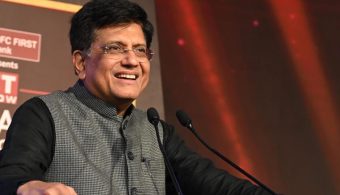

Photo Credit: GNTO
German aviation group Lufthansa is expanding capacity and introducing newer passenger products in India as the country emerges as an increasingly important market for travel to Germany.
At the Travel Destination Germany Press Conference 2026 in New Delhi on July 28, Lufthansa Group said India would benefit from its €3-billion global investment in new seats, cabin interiors and passenger services. The group is also deploying an Airbus A380 on the Munich–Mumbai route and expanding its Indian network through a new SWISS International Air Lines service between Bengaluru and Zurich.
The aviation push accompanied the German National Tourist Office’s announcement of four campaign themes for 2026—culture, cities, cuisine and nature—as Germany seeks to take annual overnight stays by Indian travellers beyond one million.
A380 to sharply increase Mumbai–Munich capacity
Lufthansa will deploy the Airbus A380 on the Munich–Mumbai route from August 1 to September 27, 2026, temporarily replacing the smaller Airbus A350 used on the sector.
The change will increase the number of seats available on each flight from about 270 to more than 500, nearly doubling capacity on the route during the deployment period.
Kevin Markette, Senior Director, Sales, South Asia, Lufthansa Group, said bringing the group’s latest aircraft technology and passenger products to India demonstrated the market’s strategic importance.
He said Lufthansa’s immediate priority was to consolidate the deployment of its newer aircraft and cabin products while expanding through larger aircraft, additional frequencies and carefully selected routes.
The airline group currently operates approximately 11 daily flights from India. Its investment strategy also places emphasis on more fuel-efficient aircraft as airlines respond to rising operating costs and pressure to reduce emissions.
India to benefit from Lufthansa’s €3-billion product investment
Lufthansa Group’s €3-billion programme is a global investment covering new-generation seats, upgraded cabins and improvements to the passenger experience across its airlines.
India is expected to benefit through the introduction of newer aircraft and the rollout of Lufthansa’s Allegris long-haul cabin product. The investment should therefore not be interpreted as €3 billion being allocated solely to Lufthansa’s Indian or India-bound fleet.
Markette said the arrival of the group’s latest products in India was intended to strengthen its position in a market that continues to record steady passenger growth.
The group’s India strategy currently centres on raising capacity on existing routes, introducing larger and newer aircraft and expanding connectivity through its European hubs.
SWISS to launch Bengaluru–Zurich flights
Swiss International Air Lines, a Lufthansa Group carrier, will begin nonstop flights between Bengaluru and Zurich on October 27, 2026.
The five-times-weekly service will be SWISS’s first route to Bengaluru and will make the city its third destination in India after Delhi and Mumbai. The flights will be operated using an Airbus A330-300 with 236 seats.
The route will connect southern India with the airline’s Zurich hub, providing onward access to destinations across Europe and North America. It is also expected to serve business demand linked to Bengaluru’s technology sector, alongside leisure travellers, students and the Indian diaspora.
The new route adds an important southern Indian connection to the Lufthansa Group network and complements Lufthansa’s services from other major Indian cities.
Transit visa requirement removed
The expansion comes after Germany abolished its airport transit visa requirement for Indian nationals on June 3, 2026.
Indian passport holders travelling to a third country can now change flights within the international transit area of a German airport without obtaining a separate Type A airport transit visa. The change could make Frankfurt and Munich more attractive transfer hubs for passengers travelling between India and destinations outside the Schengen Area.
The measure does not provide visa-free entry into Germany. Travellers who need to cross border control, collect and recheck baggage, change airports or enter the Schengen Area must still meet the applicable visa requirements.
Indian overnight stays approach one-million mark
Germany recorded approximately 928,000 overnight stays by Indian visitors in 2025, an increase of 3.4% over the previous year. These stays were generated by more than 330,000 Indian travellers.
Between January and May 2026, Indians accounted for 350,488 overnight stays in Germany, up 0.1% from the corresponding period in 2025. May alone recorded 86,870 overnight stays.
The January–May total was equivalent to 94.8% of the overnight stays registered during the comparable pre-pandemic period in 2019. India is currently Germany’s fourth-largest Asian source market.
Romit Theophilus, Director of the German National Tourist Office in India, said the organisation aims to cross one million annual overnight stays from India within the next two years.
He said Indian leisure travellers stay in Germany for an average of nine nights and spend more than €3,000 per trip, including expenditure on accommodation, food and local transport.
Indian bookings record strongest growth
Bookings from India for travel to Germany between October 2025 and March 2026 increased by 31.5% over the corresponding year-earlier period, the highest rate among the major markets covered by data presented at the July 28 briefing.
Bookings from the United Arab Emirates increased by 22%, followed by Israel at 21%, China at 17.3%, Japan at 13.3% and the United States at 4.7%. Overall international bookings for Germany grew by 7%.
A survey conducted by the German National Tourist Board and Appinio across 12 countries in August 2025 found that 61% of Indian respondents were considering a holiday in Germany—the highest share among the markets surveyed.
Faster German visa appointments
German Ambassador to India Dr Philipp Ackermann said Germany issues approximately 200,000 to 250,000 visas in India annually and has significantly reduced appointment delays.
Tourist-visa appointments at the German Embassy in New Delhi are now generally available within two days for much of the year, although the waiting period can rise to around six weeks during the peak season.
Ambassador Ackermann said Germany’s visa system in India had become more efficient, while acknowledging that the potential for travel between the two countries remained far from fully realised.
He said the expanding Indian community in Germany—including students, professionals and their families—was also supporting tourism by encouraging visits from friends and relatives.
Germany promotes experience-led travel
GNTO’s 2026 tourism strategy reflects changes in the way Indians travel. Instead of concentrating only on major sightseeing destinations, more visitors are exploring individual regions, outdoor experiences and personalised itineraries.
Culture will be promoted through events including the 150th anniversary of the Bayreuth Festival, which was founded in 1876 and is closely associated with composer Richard Wagner.
Germany’s cities form another campaign pillar, with Berlin, Munich, Hamburg and Frankfurt being promoted for their history, architecture, innovation and contemporary culture.
The cuisine campaign will highlight Germany’s 13 wine-growing regions, more than 11,000 wineries, approximately 1,500 breweries and extensive regional food traditions.
Nature and slow travel will form the fourth pillar, covering cycling routes, vineyard trails, hiking, wellness holidays and outdoor experiences for families and multigenerational groups. Germany will also be marketed to Indian travellers as a destination for honeymoons and weddings.
The combination of Lufthansa’s capacity expansion, the new Bengaluru–Zurich connection, relaxed airport-transit rules and Germany’s tourism campaign signals a broader attempt to deepen travel links with India. For Germany, improved aviation connectivity will be central to converting growing interest from Indian travellers into more visitors and longer stays.