
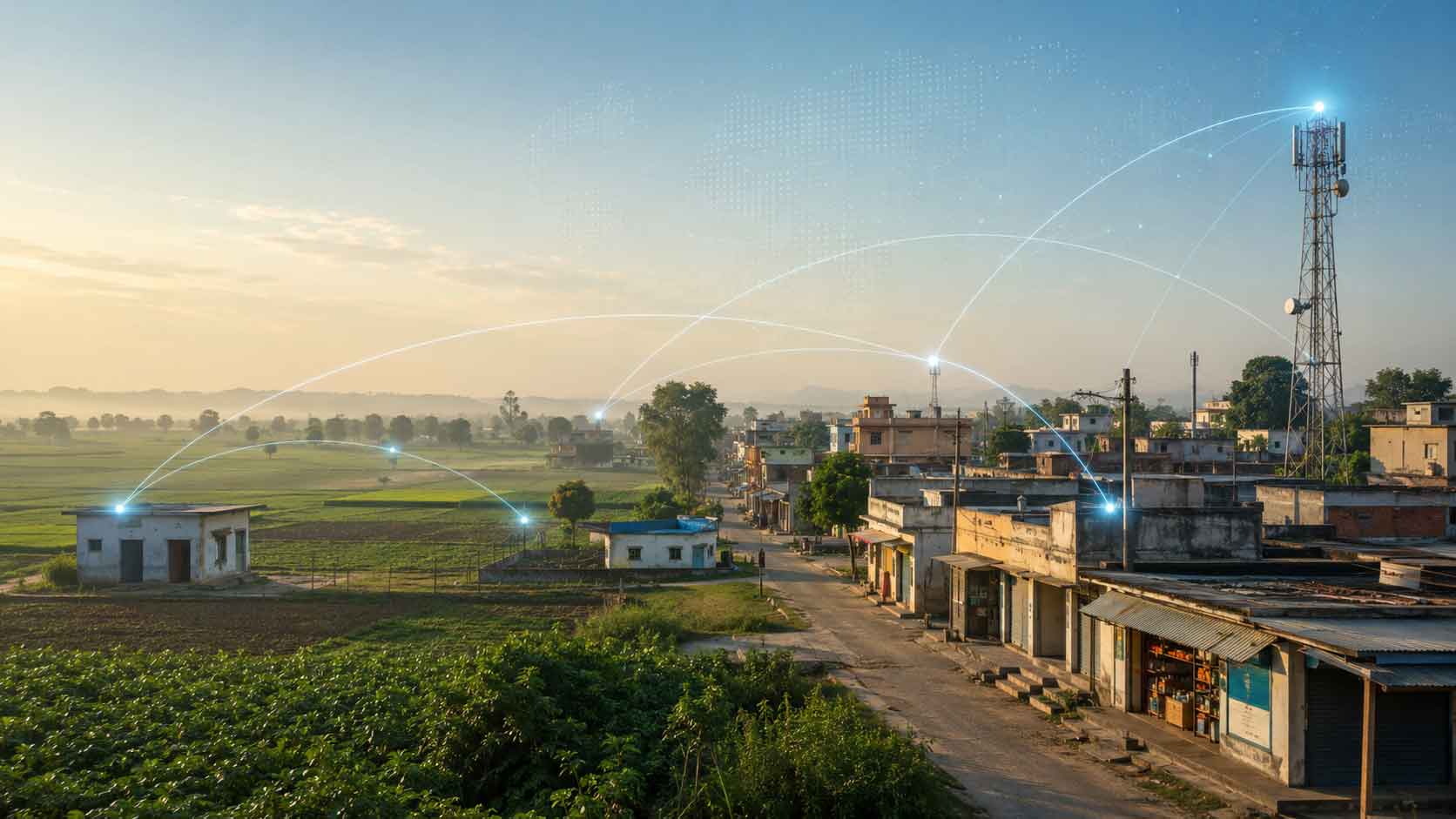
India’s smaller cities and rural regions are expected to play an increasingly important role in the expansion of the country’s digital economy, as artificial intelligence moves from limited experimentation to wider commercial and practical use.
Speaking at the ET World Leaders Forum 2026, Google India Managing Director Preeti Lobana said small enterprises, farmers and workers would be central to the next phase of digital growth. She argued that the economic benefits of artificial intelligence must extend beyond large companies and reach communities and businesses across Tier-2 and Tier-3 cities and rural India.
This wider participation will be important to India’s ambition of building a digital economy valued at US$1 trillion.
AI adoption moves towards practical deployment
Indian businesses are gradually moving beyond pilot projects and beginning to integrate artificial intelligence into routine operations. This transition is expected to determine how much measurable economic value the technology ultimately generates.
For smaller enterprises, potential applications include automating administrative work, improving customer engagement, analysing demand and managing supply chains. In agriculture, AI-based tools can support crop monitoring, weather assessment, market access and advisory services.
Lobana also identified cybersecurity as an area where AI could serve as a “force multiplier”, helping businesses and users detect and respond to digital threats more effectively.
However, the expansion of AI beyond India’s largest companies and metropolitan centres will depend on access to computing capacity, reliable connectivity and affordable digital services. Skills, language accessibility and cybersecurity safeguards will also influence the pace of adoption.
Rural connectivity provides expanding base
India has substantially expanded the digital infrastructure required to support this transition.
Government data released in July 2026 showed that the country had more than 1.09 billion internet subscribers at the end of March 2026, compared with 251.5 million in March 2014.
As of June 2026, around 221,000 Gram Panchayats had been made service-ready under the BharatNet programme. More than 24,800 mobile towers had also been commissioned under government-funded connectivity projects.
Common Service Centres remain an important part of last-mile access, particularly for people who may not own suitable devices or possess advanced digital skills. According to government figures, approximately 501,000 centres were operating across India in May 2026, including 391,000 at the Gram Panchayat level. These centres provide access to more than 800 government and commercial services.
The expansion of connectivity does not, by itself, guarantee productive digital participation. The next stage will depend on whether farmers, local businesses and workers can use digital platforms to improve productivity, reach markets and access essential services.
Growth increasingly moving beyond metropolitan centres
The changing geographical profile of India’s digital economy is significant for technology companies and investors. Digital consumption was initially concentrated in metropolitan areas, but the availability of affordable mobile data, online payments and vernacular services has widened the market.
Tier-2 and Tier-3 cities now represent a growing base of online consumers, entrepreneurs, technology workers and digital creators. Rural users are also participating more actively in digital payments, e-commerce, online education, telemedicine and government service platforms.
This shift will require technology products to be designed for a more diverse range of users. Services developed primarily for English-speaking, metropolitan consumers may not address differences in language, digital literacy, connectivity and business requirements across smaller towns and villages.
India’s next phase of digital growth is therefore likely to be determined not only by advances in AI, but by how widely those capabilities can be deployed across the country. The expansion of digital infrastructure has created a broader foundation; converting that access into economic participation will now be the central test.